Editorial | February 21, 2026
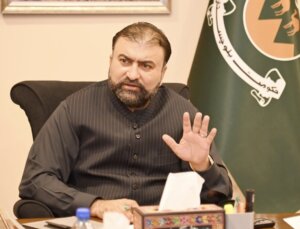
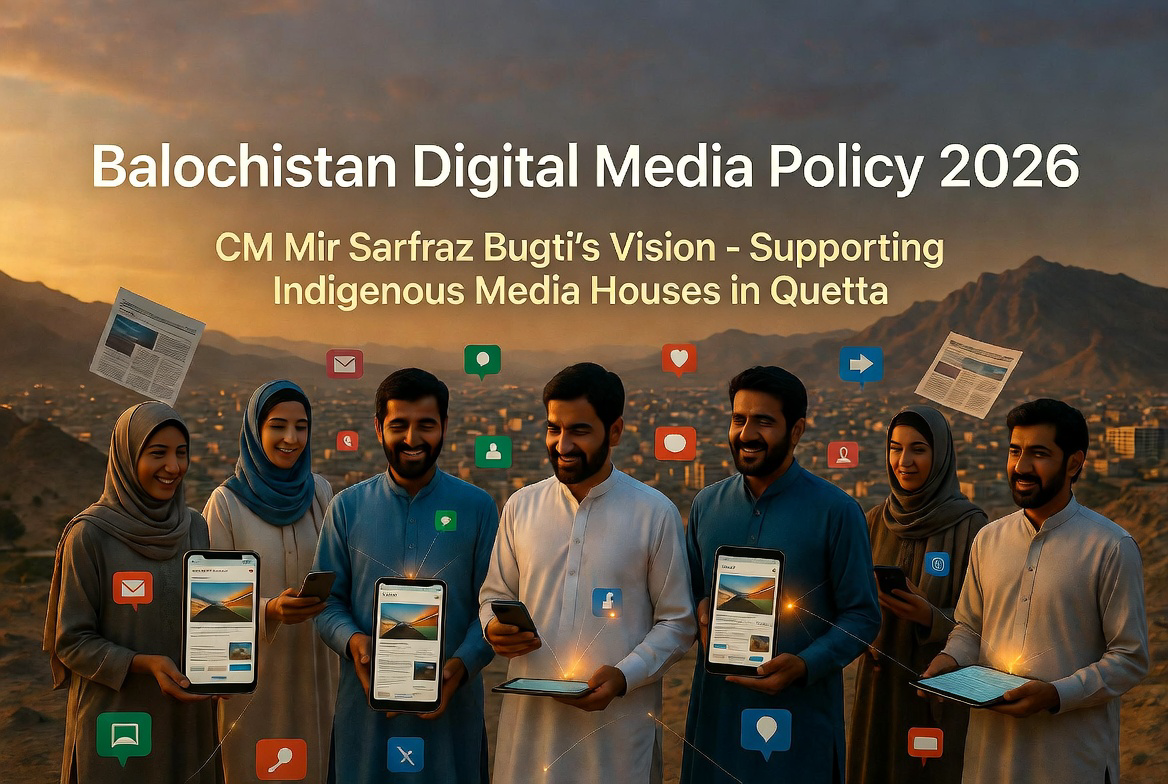
When Mir Sarfraz Bugti, Chief Minister of Balochistan, addressed the provincial assembly on the proposed digital media policy, it struck a rare chord of optimism within the media community. His acknowledgment of a hard truth, that newspaper readership in the province has sharply declined, felt honest, timely, and necessary.
More importantly, his message went beyond diagnosis. By signaling a shift towards digital platforms, promising responsible journalism, transparency, and fair wages for media workers, the chief minister offered something the local media has long been denied: recognition and hope.
Why Digital Media Matters for Balochistan
Balochistan’s geography alone makes digital outreach essential. Vast distances, scattered populations, and limited access to print media mean that traditional newspapers can no longer serve as the primary bridge between the state and the public.
Digital media, on the other hand, collapses these distances. With a single click, voices from remote districts can reach not only Quetta, but Islamabad, and beyond. For a province of immense geo-strategic importance, this shift is not a luxury; it is a necessity.
Indigenous Media: Ready, Verified, Yet Ignored
What makes this policy announcement particularly encouraging is that Balochistan’s indigenous media houses are already prepared. These are not informal or fly-by-night operations. They are fully verified and certified outlets, maintaining: Established print editions, Active digital platforms, Strong presence across major social media channels.
Despite this, for the past two years, not a single one of these local media houses has received a digital advertisement from the federal Press Information Department. This is despite the fact that they represent Pakistan’s largest province by area and play a critical role in shaping local and national narratives.
Zero advertisements. Zero recognition.
A Question of Fairness and Federal Responsibility
If indigenous media houses in Balochistan are empowered, the province’s authentic voice can finally resonate in the power corridors of Islamabad. Fair treatment is not a favor, it is a right.
The provincial government must not only reform its own media policies but also actively advocate for these local outlets at the federal level. Islamabad’s continued neglect of Balochistan’s verified media platforms undermines both press freedom and equitable representation.
Consultation Is the Key to Credibility
As this digital media policy takes shape, one principle must remain non-negotiable: inclusivity. The government should engage meaningfully with: Journalists’ unions, Owners of verified indigenous media houses, Civil society representatives, Political stakeholders.
A policy made without consultation risks repeating old mistakes. A policy shaped through dialogue can set a national benchmark.
Government advertisements, in particular, must be distributed transparently and on merit. They should reward credibility, consistency, and balanced reporting, not personal connections or “blue-eyed” favoritism.
The Human Cost Behind the Headlines
Behind every local newsroom are many media workers, reporters, photographers, editors, who travel long distances, often at personal risk, to keep Balochistan’s stories alive. These are the people who sustain the province’s narrative, often with minimal resources and little institutional support.
The chief minister’s words have rekindled hope among them. Now, that hope must translate into concrete action.
Getting It Right This Time
The future of Balochistan’s media lies in backing its own people and platforms. A fair, transparent, and inclusive digital media policy can do more than modernize communication, it can restore trust, strengthen democracy, and finally give Balochistan the voice it deserves.