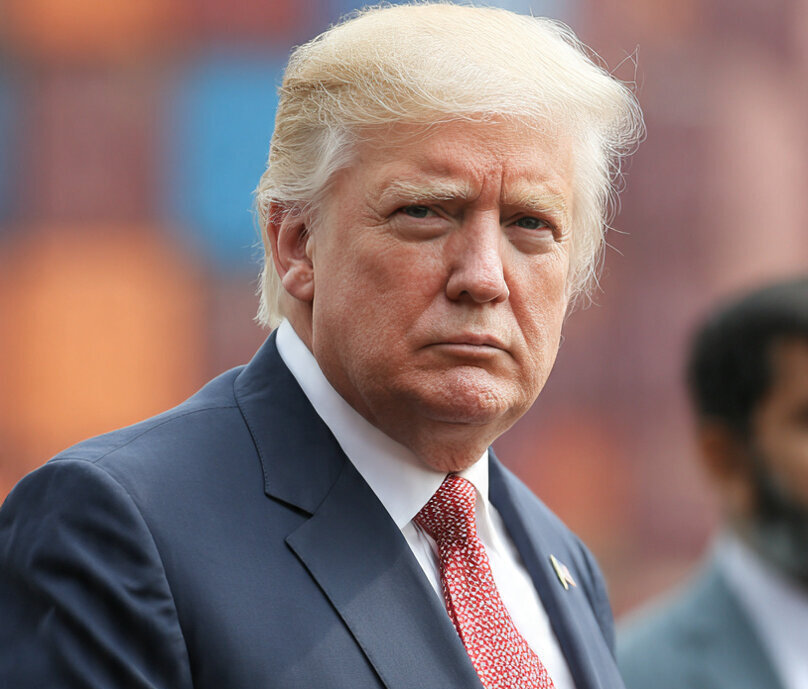
News Desk: The United States may impose additional tariffs on Indian exports if New Delhi does not significantly scale back its imports of Russian crude, President Donald Trump warned on Sunday, adding pressure as stalled trade negotiations drag on.
Speaking aboard Air Force One, Trump said Prime Minister Narendra Modi understood Washington’s frustration, noting that U.S. authorities could raise duties on Indian products “very quickly” if required. India’s commerce ministry did not immediately comment.
The remarks follow months of uneasy talks after the United States doubled tariffs on a range of Indian goods to 50% last year, citing India’s continued energy dealings with Moscow. Financial markets reacted nervously, with India’s IT index sliding on fears the dispute could delay a potential trade agreement.
U.S. Senator Lindsey Graham, traveling with Trump, argued that sanctions on Russian oil companies and steeper duties on India had already reduced Indian purchases of Russian crude. He is backing legislation that would authorize tariffs of up to 500% on countries that keep buying discounted Russian oil, saying such imports help sustain Russia’s war effort.
Trade analysts caution that India’s cautious approach may be costly. Ajay Srivastava of the Global Trade Research Initiative said Indian exports are already burdened by high U.S. tariffs, half of which are linked to Russian oil. Although refiners have trimmed purchases, he said India remains in a “grey zone,” and ambiguity may weaken its negotiating position.
Srivastava added that even a complete halt might not end U.S. pressure, which could shift toward other trade demands. Meanwhile, despite tariff headwinds, India’s exports to the U.S. rose in November, though shipments have declined sharply since mid-2025. Talks between the two countries continue, but a breakthrough remains elusive.