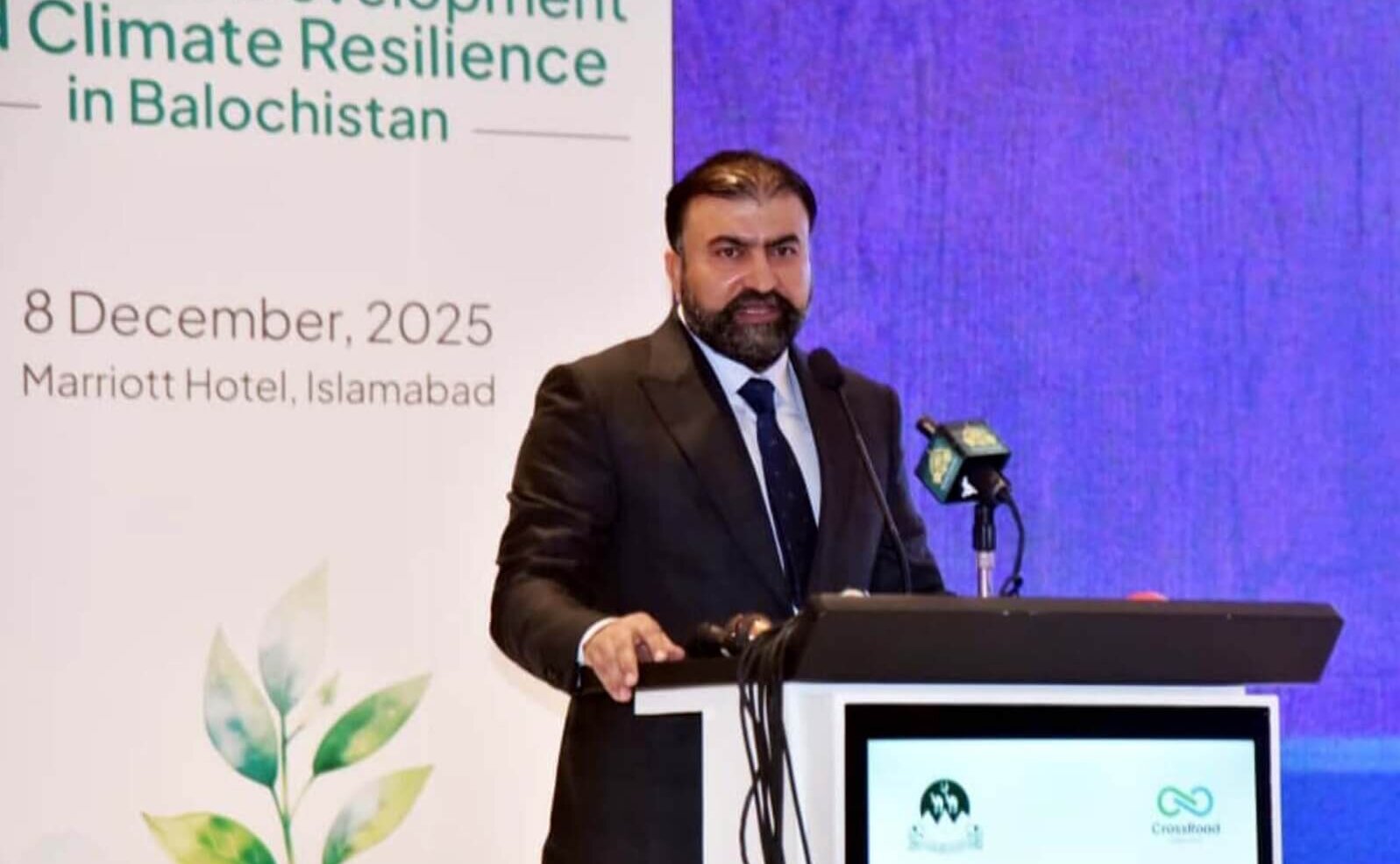
Syed Muhammad Qaseem: Balochistan Chief Minister Mir Sarfraz Bugti has issued a strong call for intensified climate action, warning that the province is facing an alarming overlap of environmental shocks and widespread poverty. Speaking at a high-level symposium titled “Sustainable Development and Environmental Resilience in Balochistan”, he said the province is battling climate change on multiple fronts while striving for long-term sustainable development.
Bugti revealed that 51% of households in Balochistan live under income poverty, while 71% of the population faces multidimensional poverty, making the province one of the most climate-vulnerable regions in Pakistan. He said recurring droughts, abnormal rainfall, flash floods, severe heatwaves, and unpredictable weather patterns have disproportionately impacted the poorest communities.
The symposium was organized by the Balochistan Planning and Development Department and focused on climate resilience, renewable energy, food security, and environmental sustainability. Bugti stressed that, following COP30, the global community must accelerate climate commitments, adding that regions like Balochistan need urgent support and strategic partnerships.
Highlighting the provincial government’s response, he said Balochistan has introduced a comprehensive Climate Change Policy covering energy, transport, agriculture, and water sectors. The province is expanding solar and wind power projects, promoting electric mobility, and strengthening green infrastructure to cut reliance on fossil fuels.
In the agriculture sector, the government is promoting conservation agriculture, agroforestry, and climate-smart farming techniques to boost food security and reduce emissions. He said efficient water management and the revival of forest cover have also been prioritised to shield communities from future climate shocks.
Bugti emphasized that carbon trading presents a major opportunity for Balochistan to tap into international climate finance. The province is developing an advanced carbon market framework, including blue carbon projects modelled after the successful Delta Blue Carbon initiative in Sindh.
Calling for collective action, he urged public institutions, global partners, the private sector, and civil society to work together for a resilient and sustainable future. Bugti congratulated the organisers and expressed hope that continuous collaboration would turn climate challenges into achievable development goals.