News Desk: Defence Minister Khawaja Asif and Interior Minister Mohsin Naqvi have defended their roles in Pakistan’s diplomatic engagement with Iran, saying a recent high-level meeting in Tehran was focused on regional peace and security rather than defence matters.
Their responses came after Jamiat Ulema-i-Islam-Fazl (JUI-F) chief Maulana Fazlur Rehman questioned Asif’s absence from the meeting and Naqvi’s participation.
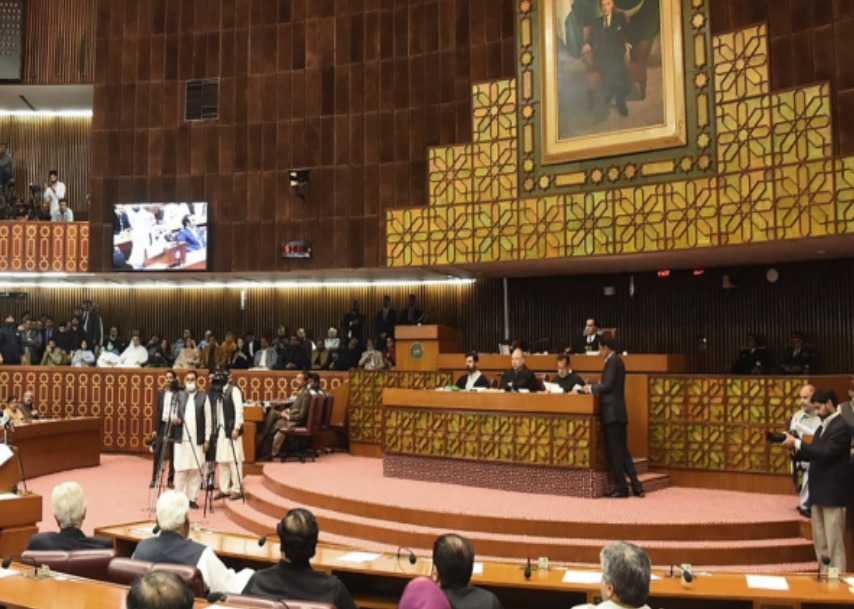
Speaking in the National Assembly on Thursday, Asif said the Tehran discussions did not involve negotiations on a new defence agreement and fell outside the direct responsibilities of the Defence Ministry.
He said Chief of Defence Forces and Chief of Army Staff Field Marshal Asim Munir had taken on a diplomatic role to promote dialogue and prevent further escalation in the region following last year’s military confrontation between Pakistan and India.
Asif noted that he had participated in Pakistan’s defence-related arrangements, including the Makkah defence pact and the Badr Memorandum of Understanding, in his capacity as defence minister. However, he maintained that the Tehran meeting had a different purpose.
According to Asif, Field Marshal Munir helped facilitate the meeting by encouraging dialogue among regional countries. Iranian Foreign Ministry spokesperson Esmaeil Baqaei had also said that Munir proposed the Tehran meeting during his visit to Iran.
The defence minister said Pakistan’s diplomatic efforts had helped avert a potentially wider confrontation and expressed hope that further engagement could ease regional tensions, including those involving Saudi Arabia and Yemen.
He also urged Fazlur Rehman to reconsider his criticism, describing it as misplaced, and called for Pakistan’s diplomatic role to be recognised despite political differences.
Mohsin Naqvi says PM assigned him Iran crisis role
Interior Minister Mohsin Naqvi separately defended his participation in the Tehran meeting during proceedings in the Senate, saying Prime Minister Shehbaz Sharif had specifically assigned him responsibilities concerning the regional conflict.
Naqvi said he travelled to Iran alongside Field Marshal Asim Munir to help address the ongoing crisis. He stressed that the visit was undertaken on the prime minister’s instructions rather than on his own initiative.
Responding to questions about Asif’s absence, Naqvi said the meeting was not related to defence and therefore did not require the defence minister’s participation.
He also expressed disappointment over Fazlur Rehman’s recent remarks, saying he had previously held the JUI-F chief in high regard.
The interior minister further criticised statements he attributed to JUI-F leaders concerning state institutions, triggering a heated exchange with JUI-F Senator Kamran Murtaza.
Murtaza objected to Naqvi’s remarks, arguing that the minister should not use the Senate to pursue a personal agenda. Presiding officer Shahadat Awan intervened and ordered the word “disgusting” to be expunged from the parliamentary record.
Fazlur Rehman questions ministers over Tehran talks
The controversy began when Fazlur Rehman raised questions about Pakistan’s participation in the Tehran meeting during his National Assembly address on Wednesday.
He questioned why the defence minister was present in parliament while a gathering involving senior Pakistani, Iranian, Saudi and Turkish officials was taking place in Tehran. He also challenged the need for the interior minister to attend.
The meeting brought together Field Marshal Asim Munir, Saudi Defence Minister Prince Khalid bin Salman and Turkish intelligence chief Ibrahim Kalin. Iranian President Masoud Pezeshkian, Foreign Minister Abbas Araghchi and other senior officials also attended.
The participants agreed to continue consultations aimed at strengthening regional cooperation, with particular emphasis on peace and security.
The exchange between the government ministers and the JUI-F leadership has brought renewed attention to Pakistan’s diplomatic efforts to manage regional tensions and the respective roles of civilian and military officials in those efforts.