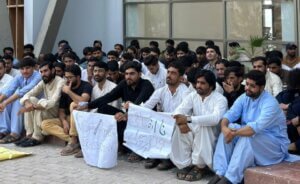
News Desk: Political leaders in Balochistan have thrown their weight behind the Pakistan Federal Union of Journalists (PFUJ) nationwide protest movement, demanding press freedom, protection of journalists and improved working conditions for media employees.
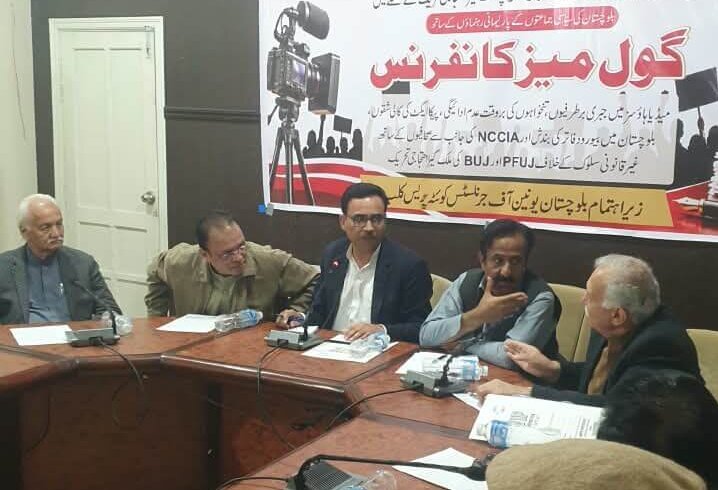
The political leaders expressed their support during a roundtable conference organised by the Balochistan Union of Journalists (BUJ) and Quetta Press Club at the Quetta Press Club as part of the PFUJ’s countrywide protest campaign.
The conference was attended by National Party President and former Balochistan chief minister Dr Abdul Malik Baloch, Balochistan National Party-Awami chief and MPA Mir Asad Baloch, Jamaat-e-Islami Balochistan chief and MPA Maulana Hidayat ur Rehman, and senior journalists.
Addressing the gathering, Maulana Hidayat ur Rehman said journalists in Balochistan were facing serious challenges, while restrictions on journalism had affected press freedom across the province.
He said Jamaat-e-Islami fully supported the journalists’ nationwide protest movement and stood with the media community in its struggle for professional rights.
Mir Asad Baloch said journalists were fighting not for personal interests but for the rights of society and the public at large.
He criticised media house owners for earning substantial profits without providing adequate facilities to their employees. He also alleged that some major media owners had earned money in Balochistan and invested in properties abroad.
He reiterated his party’s support for the nationwide campaign and called for addressing the problems confronting working journalists.
Former chief minister Dr Abdul Malik Baloch urged journalists to prepare a resolution outlining their professional and economic challenges, saying he would also raise their concerns in the Senate.
Criticising the country’s political and governance system, he said a small section of the elite continued to exercise influence while ordinary citizens remained deprived of basic facilities.
He said authoritarian governments had repeatedly undermined democratic and social principles, while major political parties also shared responsibility for public deprivation.
Dr Malik expressed concern over restrictions on political expression, saying that even raising questions about the authorities could result in show-cause notices. He recalled that political parties had previously organised protests against the federal government, but the political environment had become increasingly restrictive.
Questioning the state of democracy, he asked what citizens could expect if they were not allowed to exercise their right to vote freely.
He also expressed concern over restrictions on political activities, saying that people were facing difficulties even returning to their homes.
Referring to Balochistan’s historical identity, Dr Malik said diverse communities had inhabited the region for thousands of years and questioned proposals for creating new provinces without taking these historical realities into account.
The participants reiterated their support for the PFUJ protest movement and called for protecting freedom of expression, safeguarding journalists’ rights and improving working conditions across the media industry.