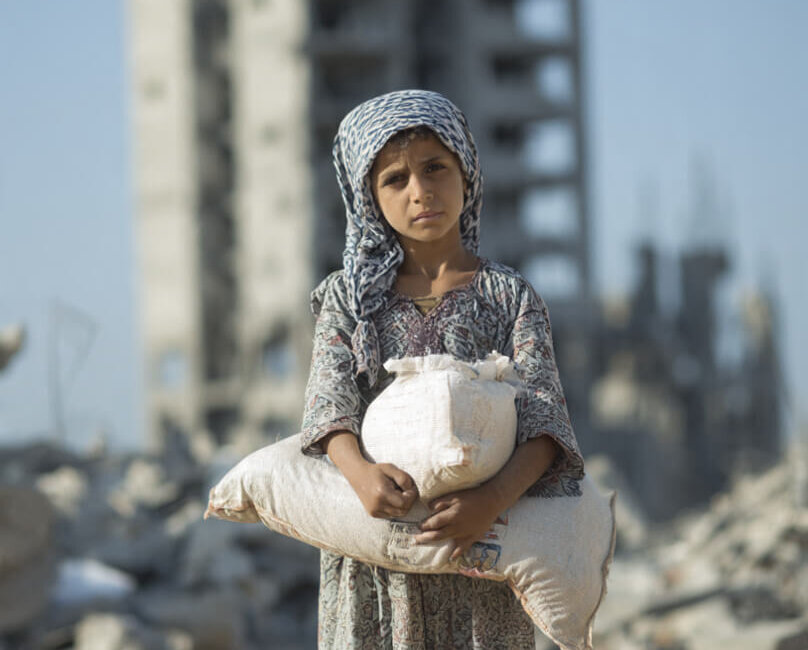
Syed Muhammad Qaseem: UN-backed food security experts report that nutrition and food supplies in Gaza have improved since the October ceasefire, yet over 100,000 people were still living in “catastrophic conditions” last month.
In August, the Integrated Food Security Phase Classification (IPC) indicated that around 500,000 Gazans, about a quarter of the population, were experiencing famine-like conditions. Following the truce, UN agencies and humanitarian organizations have been able to increase food deliveries into the territory.
Despite progress, the latest IPC assessment shows that half a million people still faced emergency food insecurity last month, with more than 100,000 under IPC Phase 5, the most severe level, described as “catastrophic” for households. While the report expects this number to decline over the coming months, experts warn the situation remains fragile and could worsen if violence resumes.
IPC Phase 5 denotes extreme food insecurity, and no areas in Gaza are currently classified as famine zones. Malnutrition remains critical in Gaza City and serious in Deir al-Balah and Khan Younis.
Israel dismissed the report as inaccurate, criticizing IPC’s methodology and stating that aid deliveries have exceeded UN-calculated requirements. Cogat, the Israeli body overseeing Gaza crossings, denied restricting winter, medical, or drinking water supplies.
The IPC highlighted major drivers of food insecurity, including limited humanitarian access, the displacement of more than 730,000 people, and destruction of livelihoods, with over 96% of cropland destroyed or inaccessible. UNRWA emphasized that, although famine has been avoided, living conditions remain dire, particularly with harsh winter weather, and called for consistent and expanded humanitarian and commercial access.