News Desk
Quetta — UNHCR, the UN Refugee Agency, has officially handed over 48 solarized public facilities worth approximately PKR 1 billion (USD 3.5 million) to the Government of Balochistan, marking a major milestone in renewable energy, public service delivery, and climate-resilient development in Pakistan.
The initiative provides clean, reliable, and cost-effective solar energy to essential public institutions, including schools, universities, healthcare centers, and technical training institutes, with a special focus on refugee-hosting districts of Balochistan. Implemented during 2024–2025, the project addresses chronic challenges such as power outages, unstable grid electricity, and high diesel fuel costs, which have long affected public service delivery in the province.
The project was supported by key international development partners, including Global Affairs Canada, Germany’s Federal Ministry of Economic Cooperation and Development (BMZ), the Korea International Cooperation Agency (KOICA), and the Kingdom of the Netherlands. Among the flagship facilities solarized under the initiative is the Bolan Medical Complex, with additional support from UNHCR’s private-sector partner, LONGi Green Energy Technology Co. Ltd.
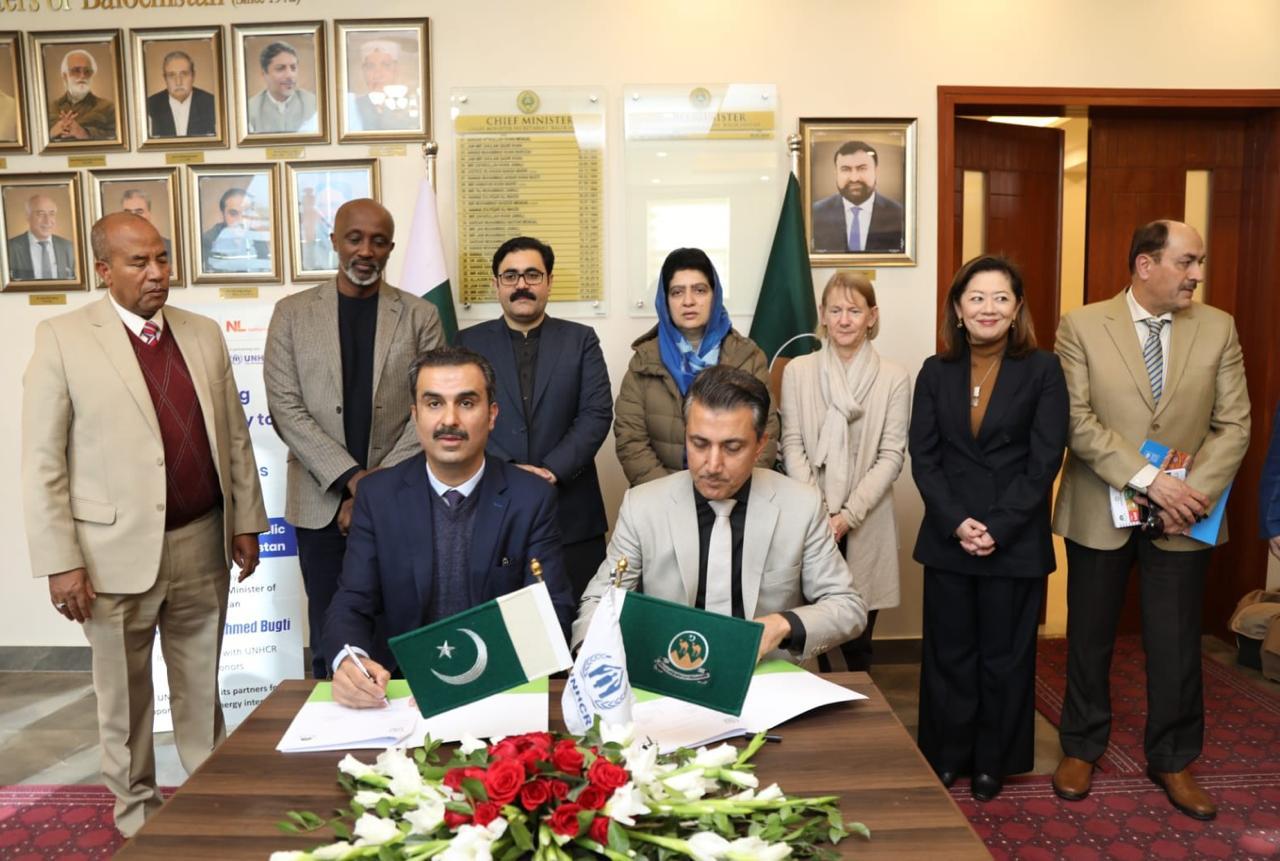
The official handover ceremony was held at the Chief Minister’s Office in Quetta and was attended by Chief Minister Sarfaraz Bugti, UN Resident Coordinator Mohamed Yahya, UNHCR Representative in Pakistan Ms. Philippa Candler, Head of UNHCR Quetta Office Mr. Tesfaye Bekele, along with senior government and United Nations officials.
By transitioning critical public infrastructure to renewable solar power, the initiative ensures uninterrupted electricity supply, reduces dependence on the national grid, and significantly lowers recurring operational and energy costs. These improvements are already strengthening the delivery of quality education and healthcare services across Balochistan.
UN Resident Coordinator Mohamed Yahya praised the project’s impact and acknowledged Pakistan’s 45-year commitment to hosting Afghan refugees, emphasizing the need for sustained international support for both refugee and host communities.
UNHCR Representative Ms. Philippa Candler underscored the importance of energy security in sustaining public services and institutional resilience.
> “Reliable energy is essential for maintaining vital public services that support both Afghan refugees and host communities. UNHCR remains committed to ensuring dignity, protection, and inclusive access to services for all,” she said.
The solar-powered public facilities are expected to benefit nearly two million people annually, including students, teachers, healthcare workers, patients, refugees, and local host communities.
In addition to strengthening public service delivery, the initiative contributes to climate change mitigation by reducing greenhouse gas emissions and reliance on fossil fuels, aligning with Pakistan’s national and provincial climate action priorities in one of the country’s most climate-vulnerable regions.