News Desk
Quetta: The Balochistan provincial cabinet, chaired by Chief Minister Mir Sarfraz Bugti, has approved wide-ranging reforms in education, healthcare, public procurement, mineral development, industrial revival and public service delivery.
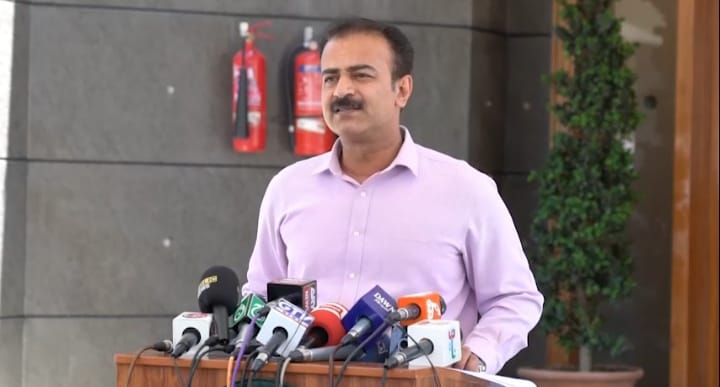
Briefing the media after the meeting, Chief Minister’s Adviser on Information and Political Affairs Shahid Rind said the decisions reflected the provincial government’s commitment to economic development, institutional reforms and public welfare.
“The decisions taken by the provincial cabinet represent important progress towards policymaking based on public needs, modern requirements and practical reforms,” Shahid Rind said.
He said the government was working to ensure that the benefits of its decisions reached ordinary citizens rather than remaining confined to official documents.
Government Targets 1.6 Million Out-of-School Children
The cabinet approved the Balochistan Non-Formal Education Act 2025 and a policy for introducing double-shift teaching in government schools.
According to Shahid Rind, the provincial government aims to bring approximately 1.6 million children aged 10 to 16 into the education system through a new programme.
“Children who could not enrol in formal schools for various reasons will be provided educational opportunities through non-formal education so that they can rejoin the education system,” he said.
The double-shift policy will allow schools to accommodate additional students by utilising existing buildings and infrastructure, including through evening classes.
The cabinet also approved the formation of the administrative board of the Balochistan Education Foundation.
Mineral Fund, Tourism and Industrial Revival
The cabinet approved a policy for the utilisation of the Balochistan Mineral Development Fund, along with draft tourism and cultural policies.
Shahid Rind said the government intended to use the financial benefits generated by mineral resources more effectively for provincial development and public welfare.
The tourism and cultural policies aim to promote local economic activity, create employment opportunities and protect Balochistan’s historical and cultural heritage.
The cabinet also approved a policy to revive closed and inactive industrial units by providing financial assistance and incentives to eligible businesses.
“The government is working to strengthen the province’s economic foundations through industrial revival, ease of doing business, effective utilisation of mineral resources, promotion of tourism and culture, and modernisation of agriculture,” Rind said.
Electronic Bidding Made Mandatory for Tenders Above Rs500,000
The cabinet approved amendments to the Balochistan Public Procurement Rules 2014 to improve transparency and competition in government contracts.
Under the approved amendments, electronic bidding will be mandatory for tenders exceeding Rs500,000 across works, goods, services and consultancy.
The amendments also provide for increasing the petty purchase limit from Rs100,000 to Rs200,000 and the quotation-based procurement limit from Rs200,000 to Rs500,000.
Other proposed changes include removing bidding document fees, revising bid validity periods and introducing clearer conditions for cancelling procurement proceedings.
The reforms are intended to expand electronic procurement, reduce unnecessary administrative delays and provide more opportunities for businesses, including small and medium-sized enterprises, to participate in government contracts.
Telemedicine and Healthcare Reforms Approved
The cabinet approved the Balochistan Telemedicine and Remote Medical Services Act 2026 and the Balochistan Public Health Act 2026.
The legislation aims to strengthen the legal framework for healthcare delivery and improve access to medical specialists in remote parts of the province.
The cabinet also approved the interim appointment of Professor Abdul Razzaq as chief executive officer of the Balochistan Institute of Kidney Diseases in Quetta. The position will subsequently be advertised to recruit a qualified professional from the private sector.
Other decisions included the construction of a hostel at the cardiac institute and measures to improve healthcare services.
Women’s Protection, E-Domicile and Local Governance
The cabinet approved amendments to the Balochistan Commission on the Status of Women Act 2026 and the Balochistan Shelters and Dar-ul-Aman Administrative Control Act 2026.
Chief Minister Mir Sarfraz Bugti directed officials to prepare a comprehensive plan for establishing safe shelters for women at all divisional headquarters.
The cabinet also approved the establishment of new district councils in recently notified districts and measures to determine police station jurisdictions following the merger of Balochistan Levies into the police system.
To facilitate public services, the cabinet approved issuing e-domicile and local certificates through NADRA. The proposed government fee of Rs200 will be waived, although NADRA’s prescribed service charges will remain applicable.
The cabinet also approved the establishment of a new judicial lock-up in Uthal and the formation of the Balochistan Prisons Policy Board.
Quetta to Get Public Park and Urban Forest
To improve the urban environment, the cabinet decided to establish a public park and urban forest on Radio Pakistan land along Sariab Road through a public-private partnership.
The cabinet also agreed to a proposal to relocate dairy farms from Quetta city to the Ughabarg area along Sajdi Road to address urban cleanliness, traffic and environmental concerns.
Other approvals included adjustments to the revenue boundaries of northern and southern Quetta, tax exemptions for the federal Lolang Dam project, and an increase in the estimated cost of a mechanised cotton cultivation project.
The cabinet also approved the draft amendments to the Balochistan Service Tribunal Act 1974 and policies concerning project directors and revised remuneration for development projects.
Shahid Rind Says Reforms Will Focus on Public Welfare
Concluding the briefing, Shahid Rind said the cabinet’s decisions covered education, healthcare, economic development, women’s protection, public service delivery and administrative efficiency.
He said the government aimed to link policymaking with practical improvements in citizens’ lives.
“The government is striving to ensure that its decisions do not remain confined to paper but that their benefits reach ordinary citizens across Balochistan,” Rind said.