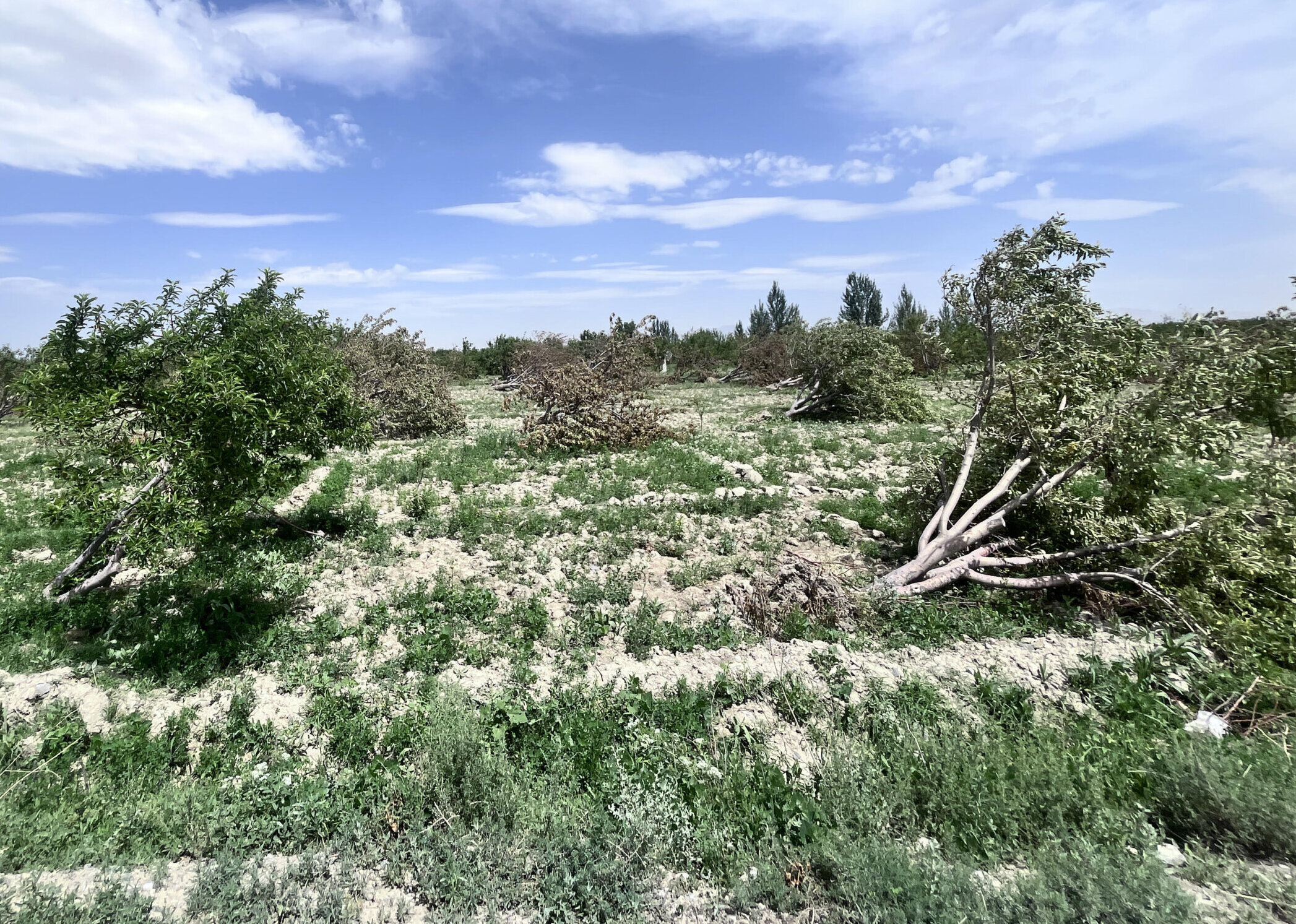
Atta Kakar: A devastating hailstorm accompanied by powerful winds has caused widespread destruction across Qila Saifullah district in Balochistan, damaging more than 7 million fruit trees and affecting nearly 18,000 farmers and landowners. The storm struck on April 18, severely impacting one of the province’s most important horticultural regions and leaving thousands of rural families facing major economic uncertainty.
The disaster caused extensive damage to orchards, agricultural land, and seasonal crops, particularly apple, apricot, and grape farms that form the backbone of the local economy. Farmers say years of hard work and investment were wiped out within minutes as hail and strong winds tore through villages and farming areas across the district.
Local growers have described the situation as catastrophic, warning that many families may struggle to survive financially without immediate government assistance. Agriculture remains the primary source of income for a large portion of Qila Saifullah’s population, and the destruction of fruit orchards is expected to have long-term economic consequences for the region.
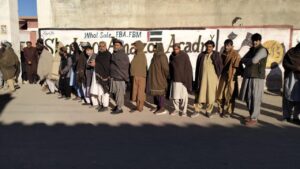
Residents and farming communities have expressed frustration over delays in relief and compensation efforts. Many affected farmers claim that official assessment and rehabilitation measures have been slow despite the scale of destruction. Calls are growing for the provincial and federal governments to announce emergency compensation packages, interest-free agricultural loans, and recovery support for affected communities.
Farmers and local representatives are also demanding restoration of damaged irrigation systems and the introduction of crop insurance mechanisms to help rural communities recover from climate-related disasters. They argue that without urgent intervention, the crisis could deepen poverty and unemployment across the district.
The Qila Saifullah hailstorm has once again highlighted the vulnerability of Balochistan’s agriculture sector to extreme weather events. Experts warn that climate-related disasters, including hailstorms, droughts, and flash floods, are becoming increasingly frequent in the province, placing additional pressure on farmers already struggling with limited infrastructure and rising production costs.
Analysts say stronger disaster management systems, climate-resilient agricultural policies, and faster emergency response mechanisms are essential to protect rural livelihoods and ensure long-term stability in Balochistan’s farming sector.