By Tech Desk | Updated: June 13, 2026 | 18 min read
Quick Summary: The iPhone 18 Pro launches September 2026 with Apple’s first 2nm A20 Pro chip, a mechanical variable aperture camera, under-display Face ID, and a 5,200mAh battery on the Pro Max. It starts at approximately $1,099, $200 cheaper than the Galaxy S26 Ultra, and outperforms both Samsung and Google on raw processing power.
Table of Contents
- Release Date and Launch Strategy
- Full Specs: iPhone 18 Pro and Pro Max
- Design and Display
- A20 Pro Chip and Performance
- Camera System: Variable Aperture Explained
- Battery and Charging
- iPhone 18 Pro vs Galaxy S26 Ultra vs Pixel 10 Pro
- Price and Availability
- Pros and Cons
- Final Verdict
- Frequently Asked Questions
1. Release Date and Launch Strategy
Apple is breaking from tradition in 2026. Rather than unveiling its entire iPhone lineup simultaneously, the company is pursuing a deliberate split-release strategy for the first time in its history. The iPhone 18 Pro and iPhone 18 Pro Max will debut alongside Apple’s first-ever foldable iPhone, the rumored “iPhone Ultra”, in early September 2026.
The announcement event is expected between September 8–14, 2026, following Apple’s consistent fall launch calendar. Pre-orders should open the Friday after the announcement, with devices shipping in late September to early October.
The standard iPhone 18 and iPhone 18e, meanwhile, are deliberately being held back until spring 2027. Apple wants maximum press attention on its premium tier and needs the manufacturing bandwidth that Samsung Display’s foldable OLED panels will demand.
Key dates at a glance:
| Milestone | Expected Window |
|---|---|
| Apple announcement event | September 8–14, 2026 |
| Pre-orders open | September 18–25, 2026 |
| Shipping begins | Late September 2026 |
| iOS 27 release | Alongside iPhone 18 Pro launch |
| Standard iPhone 18 launch | Spring 2027 |
| iPhone Fold (Ultra) launch | September 2026 (possibly delayed to early 2027) |
This is a calculated strategic move. Apple is prioritizing its most profitable models and giving the foldable iPhone room to breathe at launch. If you typically buy a base-model iPhone, you will need to wait until 2027.
2. Full Specs: iPhone 18 Pro and Pro Max
Here is everything credible leaks, supply-chain reports, and analyst forecasts point to as of June 2026. Apple has not officially confirmed these specifications.
iPhone 18 Pro — Expected Specifications
| Feature | Specification |
|---|---|
| Display | 6.3-inch OLED, ProMotion 1–120Hz LTPO |
| Processor | Apple A20 Pro (2nm, TSMC) |
| RAM | 12GB LPDDR5 |
| Storage options | 256GB / 512GB / 1TB |
| Main camera | 48MP with mechanical variable aperture |
| Ultrawide camera | 48MP |
| Telephoto camera | 48MP, wider aperture vs predecessor |
| Selfie camera | 48MP (punch-hole only) |
| Face ID | Partial under-display, smaller Dynamic Island |
| Battery | ~4,800mAh |
| Modem | Apple C2 (2nd-gen in-house 5G) |
| Connectivity | Wi-Fi 7, Bluetooth 5.4, UWB, Satellite |
| IP rating | IP69 |
| Colors | Dark Cherry, Black Titanium, Natural Titanium, White Titanium |
| Operating system | iOS 27 with Apple Intelligence 2.0 |
| Starting price | ~$1,099 (256GB) |
iPhone 18 Pro Max — Expected Specifications
| Feature | Specification |
|---|---|
| Display | 6.9-inch OLED, ProMotion 1–120Hz LTPO |
| Processor | Apple A20 Pro (2nm, TSMC) |
| RAM | 12GB LPDDR5 |
| Storage options | 256GB / 512GB / 1TB |
| Battery | ~5,200mAh (largest ever in an iPhone) |
| Charging (wired) | ~30W USB-C (adapter included) |
| Wireless charging | MagSafe (updated) |
| Starting price | ~$1,199 (256GB) |
All other specifications match the Pro model.
3. Design and Display
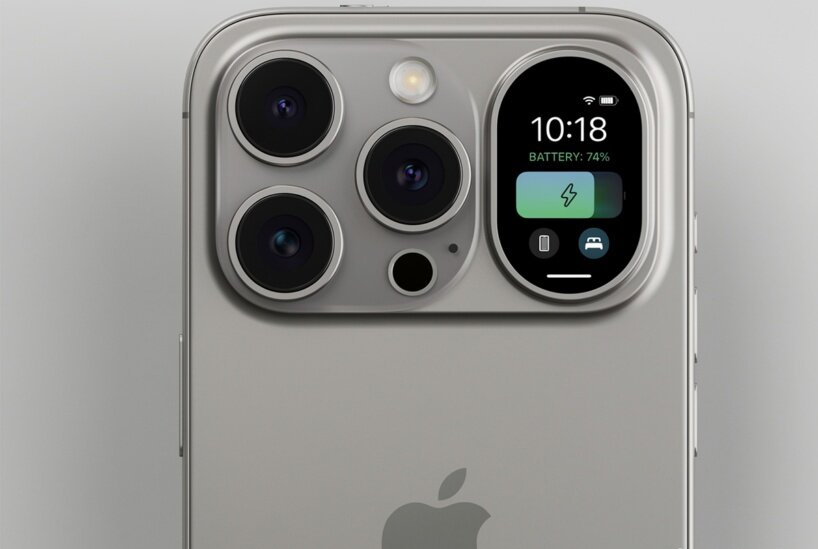
The exterior of the iPhone 18 Pro will not shock you at first glance, Apple rarely makes dramatic form-factor overhauls in back-to-back generations. The titanium frame returns, along with the triple-camera plateau on the rear. The Pro Max chassis is rumored to be fractionally thicker than its predecessor to accommodate the larger battery.
The real design story, however, plays out on the front.
Under-Display Face ID
Apple is moving most TrueDepth Face ID sensor components beneath the OLED panel, leaving only a small central punch-hole for the selfie camera. The result is a Dynamic Island that shrinks by approximately 35% compared to current models, delivering meaningfully more usable screen real estate and the cleanest-looking iPhone front panel since the notch was introduced in 2017.
It is worth noting that supply-chain reporting suggests the implementation may be partial rather than completely invisible, due to production constraints. Some Face ID components may still sit just above the display. Even so, the visible interruption will be dramatically smaller than anything Apple has shipped before.
Display Quality
Both Pro models retain the ProMotion LTPO panel with variable refresh from 1Hz to 120Hz. Peak brightness is expected to reach 3,000 nits for HDR content, matching the best displays in the Android world and surpassing most. Color accuracy, always a strength of Apple’s display calibration, is expected to improve further with the next-generation OLED panels supplied by Samsung Display.
New Colors
The standout new colorway for 2026 is Dark Cherry, a deep, rich burgundy-red that is visually unlike anything Apple has offered in the Pro lineup before. It joins Black Titanium, Natural Titanium, and White Titanium as the four available finishes.
4. A20 Pro Chip and Performance
The Apple A20 Pro is the headline hardware story of 2026, and it genuinely deserves the attention.
World’s First 2nm Mobile Processor
Built on TSMC’s cutting-edge 2nm fabrication process, the A20 Pro is a generational leap from the A19 Pro’s 3nm node. TSMC’s 2nm process packs more transistors into the same die area while simultaneously reducing power consumption. The practical result: approximately 15% faster CPU and GPU performance compared to the A19 Pro, with meaningfully better efficiency under sustained workloads.
In real-world terms, this means faster video exports, smoother real-time rendering, quicker AI inference, and better gaming frame rates, all while running cooler and consuming less battery than the previous generation.
N2 Neural Engine and Apple Intelligence 2.0
The A20 Pro’s N2 neural engine is specifically designed to accelerate Apple Intelligence 2.0 workloads. These include on-device large language model inference, real-time translation without a network connection, advanced writing assistance, ProRes video processing, and the next generation of Siri’s contextual understanding. All of this happens on-device, meaning your data does not leave the phone.
Apple C2 Modem
Equally significant is the Apple C2, the second generation of Apple’s in-house 5G modem chip. It replaces Qualcomm hardware entirely and promises lower latency, improved satellite connectivity, faster download speeds globally, and notably better battery efficiency on 5G connections compared to the C1 modem that debuted in the iPhone 17 series.
Early supply-chain reporting positions the C2 as Apple’s most competitive modem yet in terms of signal acquisition speed and sustained throughput, a claim that will be tested in real-world reviews post-launch.
| Metric | A19 Pro (iPhone 17 Pro) | A20 Pro (iPhone 18 Pro) |
|---|---|---|
| Process node | 3nm (TSMC) | 2nm (TSMC) — first ever |
| CPU improvement | Baseline | ~15% faster |
| GPU improvement | Baseline | ~15% faster |
| Neural engine | Previous-gen | N2 — next-gen on-device AI |
| Modem | Apple C1 | Apple C2 (2nd-gen) |
5. Camera System: Variable Aperture Explained
The camera is where the iPhone 18 Pro makes its boldest statement. And the most important new feature is one that photographers have been requesting for years.
What Is Variable Aperture — and Why Does It Matter?
Every camera has an aperture, the opening in the lens that controls how much light reaches the sensor. On every smartphone camera to date, this aperture is fixed. The iPhone 17 Pro’s main lens, for example, is permanently set at f/1.78.
Variable aperture means the lens can mechanically adjust how wide or narrow that opening is, exactly as a DSLR or mirrorless camera does. This gives photographers direct hardware control over two critical factors:
Depth of field: A wider aperture (lower f-number, like f/1.4) produces a shallower depth of field, more background blur for portrait photography. A narrower aperture (higher f-number, like f/8) keeps more of the scene in sharp focus, ideal for landscapes and architecture.
Light control: In bright conditions, stopping down the aperture prevents overexposure without resorting entirely to a faster shutter speed. In low light, opening the aperture wider lets in more light for cleaner, brighter images.
The key difference from software bokeh (Portrait Mode) is authenticity. Hardware-controlled depth-of-field separation is optically real. Portrait Mode produces convincing results, but trained eyes and comparison tests reveal the edges and artificial rendering. Variable aperture eliminates that problem.
iPhone 18 Pro Camera Specs
All three rear cameras on the iPhone 18 Pro are 48MP sensors. The selfie camera also steps up to 48MP, housed in a smaller punch-hole. The telephoto lens receives a wider aperture upgrade, which dramatically improves light intake for zoom shots in low-light conditions, one of the most common complaints about smartphone telephoto cameras.
The Camera Control button, introduced on the iPhone 16 Pro, gains pressure sensitivity in its second generation on the iPhone 18 Pro, allowing more granular control over exposure and aperture settings directly from the button.
Video Capabilities
Apple retains its industry-leading position in mobile video. The iPhone 18 Pro is expected to support:
- 4K at 120fps (ProRes)
- ProRes Log recording for professional color grading workflows
- Dolby Vision HDR capture
- ACES color science support
- Dual Capture (simultaneous front and rear recording)
The gap between Apple and Samsung in video quality has narrowed in 2026, but Apple’s ProRes ecosystem and color science integration remain the professional standard.
6. Battery and Charging
Battery life has been the most consistent complaint from iPhone Pro users for years. Apple is addressing it directly in the iPhone 18 Pro generation.
Bigger Batteries, Better Efficiency
The iPhone 18 Pro Max is expected to pack approximately 5,200mAh — the largest battery capacity ever in an iPhone. The standard Pro lands around 4,800mAh, also a meaningful increase over its predecessor.
Crucially, these larger batteries are paired with the efficiency gains of the 2nm A20 Pro chip and the C2 modem’s lower power draw on 5G networks. The combination means real-world screen-on time should improve substantially, not just from capacity alone, but from the entire system consuming less power.
Charging
Apple is expected to include a 30W USB-C adapter in the box with Pro models, an improvement over the historically inadequate chargers Apple has shipped previously. Wired charging speeds are anticipated to remain in the 27–30W range. MagSafe wireless charging continues, with updated puck hardware expected to deliver incrementally faster wireless speeds.
7. iPhone 18 Pro vs Galaxy S26 Ultra vs Pixel 10 Pro
This is the comparison that matters most in 2026. Here is a full head-to-head across every category that counts.
Full Specification Comparison
| Category | iPhone 18 Pro | Galaxy S26 Ultra | Pixel 10 Pro |
|---|---|---|---|
| Chip | A20 Pro (2nm) ✅ | Snapdragon 8 Elite Gen 5 (3nm) | Google Tensor G5 (3nm) |
| RAM | 12GB LPDDR5 | 12GB LPDDR5X | 16GB LPDDR5X |
| Display size | 6.3-inch OLED | 6.9-inch Dynamic AMOLED ✅ | 6.3-inch OLED |
| Refresh rate | 1–120Hz LTPO | 1–120Hz (3,000 nits peak) | 1–120Hz LTPO |
| Main camera | 48MP + variable aperture ✅ | 200MP, fixed aperture | 50MP, fixed aperture |
| Video | ProRes, 4K 120fps, Dolby Vision ✅ | 8K APV, Super Steady | 8K, Night Sight Video |
| Battery | ~4,800mAh | 5,000mAh ✅ | ~4,700mAh |
| Charging | ~30W | 45W ✅ | 30W |
| 5G modem | Apple C2 (in-house) | Snapdragon X85 | Samsung Exynos modem |
| Biometrics | Under-display Face ID | Ultrasonic fingerprint ✅ | Fingerprint + Face |
| Stylus | No | Yes (S Pen) ✅ | No |
| IP rating | IP69 ✅ | IP68 | IP68 |
| Software longevity | iOS — 6–7 years ✅ | 7 years (promised) | 7 years (guaranteed) ✅ |
| Starting price | ~$1,099 ✅ | ~$1,299 | ~$999 |
✅ = winner in that category
Performance: iPhone 18 Pro Wins Decisively
The 2nm A20 Pro chip delivers a clear and measurable lead over the Snapdragon 8 Elite Gen 5 inside the Galaxy S26 Ultra. The Snapdragon is a powerful processor, but it runs on a 3nm node, a full fabrication generation behind. In sustained workloads like video export, machine learning inference, and AAA gaming, the A20 Pro runs faster and at lower temperatures.
The Google Tensor G5 inside the Pixel 10 Pro is optimized for AI and computational photography tasks rather than raw compute. It lags behind both Apple and Qualcomm in gaming benchmarks and sustained multitasking loads, though it handles the Pixel’s software pipeline, where most of Google’s camera magic happens, with precision.
Winner: iPhone 18 Pro
Camera: Three Very Different Philosophies
Each manufacturer approaches mobile photography from a fundamentally different angle, and understanding this is key to making the right choice.
Samsung chases hardware specifications, the Galaxy S26 Ultra’s 200MP primary sensor is technically the highest resolution of the three. This translates to exceptional detail in bright conditions and impressive optical zoom reach. Samsung also leads in sheer zoom range.
Google chases computational intelligence. The Pixel 10 Pro’s 50MP sensor is outspecced on paper by its rivals, but Google’s image processing pipeline, trained on billions of photographs, produces consistently natural, true-to-life results that many users prefer for everyday shooting. Google’s Night Sight remains a benchmark for low-light photography.
Apple is now playing an entirely different game. The variable aperture system gives the iPhone 18 Pro optical versatility that neither Samsung nor Google can match with fixed-aperture hardware. Portrait photography, landscape work, and low-light performance all benefit from genuine lens control rather than software approximation. For video, Apple remains the industry standard, ProRes workflows, Dolby Vision capture, and ACES color science are the tools that professional videographers actually use.
Winner: Tie between iPhone 18 Pro (video, versatility) and Galaxy S26 Ultra (zoom, resolution), Pixel 10 Pro wins for natural computational photography
Display: Samsung’s Size Advantage vs Apple’s Polish
The Galaxy S26 Ultra’s 6.9-inch Dynamic AMOLED panel is simply larger, which many users prefer, more screen real estate for content consumption, productivity, and gaming. Samsung’s display also delivers slightly higher pixels-per-inch at comparable refresh rates.
However, Apple’s OLED calibration and color accuracy have historically scored higher in controlled lab testing, and the significantly smaller Dynamic Island on the iPhone 18 Pro makes the front panel feel dramatically more modern than previous iPhones. For users who value balance over maximum size, the iPhone 18 Pro’s 6.3-inch panel is exceptionally well-tuned.
Winner: Galaxy S26 Ultra (size) | iPhone 18 Pro (accuracy and front panel design)
Software and Ecosystem
iOS 27 brings Apple Intelligence 2.0 with a rewritten Siri, advanced on-device writing and summarization tools, real-time translation without internet, and deeper third-party app integration. The Apple ecosystem advantage, seamless continuity with Mac, iPad, Apple Watch, AirPods, and iMessage encryption, remains genuinely difficult for Android to replicate.
Samsung’s One UI 8.5 has meaningfully closed the software quality gap and is generally praised for its feature depth. However, the Android update track record, even with Samsung’s promised seven years, has historically lagged behind Apple’s execution.
Google’s Pixel 10 Pro runs the cleanest Android experience available and benefits from first access to Google’s latest AI features. Google’s guaranteed seven-year update promise matches Apple’s de facto track record for practical device longevity.
Winner: iPhone 18 Pro (ecosystem depth) | Pixel 10 Pro (cleanest Android software)
Overall Score Summary
| Category | iPhone 18 Pro | Galaxy S26 Ultra | Pixel 10 Pro |
|---|---|---|---|
| Performance | 9.5 / 10 | 8.8 / 10 | 7.8 / 10 |
| Camera | 9.2 / 10 | 9.0 / 10 | 8.8 / 10 |
| Display | 8.8 / 10 | 9.4 / 10 | 8.5 / 10 |
| Battery | 8.5 / 10 | 8.7 / 10 | 8.4 / 10 |
| Software | 9.0 / 10 | 8.5 / 10 | 8.8 / 10 |
| Value | 8.0 / 10 | 7.2 / 10 | 9.0 / 10 |
| Overall | 8.83 / 10 | 8.60 / 10 | 8.55 / 10 |
8. Price and Availability
Apple has not confirmed official pricing, but supply-chain reporting and historical pricing patterns point to the following:
| Model | Starting Price | Storage Options |
|---|---|---|
| iPhone 18 Pro | ~$1,099 | 256GB / 512GB / 1TB |
| iPhone 18 Pro Max | ~$1,199 | 256GB / 512GB / 1TB |
| iPhone Ultra (Fold) | $2,000+ | TBD |
Both Pro models are expected to be available globally at launch. The iPhone Fold — Apple’s first foldable — is projected to exceed $2,000, positioning it above Samsung’s Galaxy Z Fold 7 in the premium foldable segment.
For context, the Galaxy S26 Ultra starts at approximately $1,299, making the iPhone 18 Pro roughly $200 cheaper at the base configuration — a notable pricing advantage for Apple.
9. Pros and Cons
iPhone 18 Pro — Reasons to Buy
- First 2nm mobile chip delivers class-leading processing performance
- Mechanical variable aperture camera is a genuine photography leap
- Under-display Face ID for the cleanest iPhone front panel ever
- Best-in-class video: ProRes, Dolby Vision, 4K at 120fps
- Apple C2 modem with enhanced satellite connectivity
- iOS 27 with Apple Intelligence 2.0 ecosystem integration
- Historically 6–7 years of software updates
- New Dark Cherry color is a genuinely distinctive option
- IP69 rating — improved water and dust resistance
- $200 cheaper at launch than the Galaxy S26 Ultra
Reasons You Might Choose an Alternative
- No S Pen stylus (significant productivity disadvantage vs Galaxy S26 Ultra)
- Galaxy S26 Ultra offers a larger 6.9-inch display
- Google Pixel 10 Pro starts at $999 — $100 less expensive
- No confirmed USB 3.2 Gen 2 super-fast wired transfer speeds
- Standard iPhone 18 buyers must wait until spring 2027
- Full value requires investment in the Apple ecosystem
10. Final Verdict
The iPhone 18 Pro is the most complete flagship Apple has shipped in years, and based on everything leaked and reported through June 2026, it is positioned to lead the flagship smartphone market in the second half of the year.
The 2nm A20 Pro chip establishes a meaningful performance gap over Android rivals. The variable aperture camera is not a marketing gimmick — it is a fundamental optical tool that will improve photography across portrait, landscape, and low-light scenarios in ways that software cannot convincingly replicate. The smaller Dynamic Island and partial under-display Face ID give the front panel its most significant redesign since the notch era. And the 5,200mAh battery in the Pro Max finally addresses the endurance complaints that have followed Apple’s flagship for years.
Who Should Buy the iPhone 18 Pro?
Buy it if you are: An existing iPhone user on the 15 Pro or older, a professional or enthusiast photographer, a video creator who needs ProRes workflows, or anyone deeply invested in the Apple ecosystem across Mac, iPad, and Apple Watch.
Wait or consider alternatives if you are: An Android user without a compelling reason to switch ecosystems, someone who prioritizes stylus support (Galaxy S26 Ultra is the clear choice), or a budget-conscious buyer for whom the Pixel 10 Pro at $999 is more practical.
Consider the Galaxy S26 Ultra if: You want the largest display, S Pen productivity, and superior optical zoom range, and the $200 premium over the iPhone 18 Pro does not concern you.
Consider the Pixel 10 Pro if: You want the best value flagship in 2026, prefer clean Android software, and find Google’s computational photography more true-to-life for everyday shooting.
11. Frequently Asked Questions
When exactly will the iPhone 18 Pro be announced? Apple is expected to announce the iPhone 18 Pro and Pro Max at its annual fall event, likely between September 8–14, 2026. Pre-orders should open the following Friday, with shipping beginning in late September.
Will the iPhone 18 Pro have under-display Face ID? Yes — most Face ID sensor components are moving under the OLED display, leaving only a small punch-hole for the selfie camera. The Dynamic Island shrinks by approximately 35%. Due to production constraints, the implementation may be partial rather than completely invisible in the first generation.
What is variable aperture on the iPhone 18 Pro camera? Variable aperture means the main 48MP lens can mechanically adjust how much light enters the sensor — similar to a professional DSLR or mirrorless camera. A wider aperture creates more background blur for portraits; a narrower aperture produces sharper landscapes. This is a hardware capability, not a software filter, which means results are optically authentic rather than algorithmically approximated.
Is the iPhone 18 Pro worth upgrading to from the iPhone 17 Pro? If camera quality and photography versatility are your priority, yes — variable aperture alone is a compelling reason. The 2nm chip also delivers a meaningful performance leap. If you have an iPhone 17 Pro in good condition and are not a heavy photographer, the design similarity may not justify the cost.
How does the A20 Pro chip compare to the Snapdragon 8 Elite Gen 5? The A20 Pro uses a 2nm process vs the Snapdragon’s 3nm, delivering approximately 15% faster CPU and GPU performance with better efficiency under sustained load. Apple chips have consistently outperformed Qualcomm in single-core tasks and sustained workloads. The Snapdragon 8 Elite Gen 5 adds hardware ray tracing for gaming, which is a genuine differentiator for mobile gamers.
What colors will the iPhone 18 Pro come in? Four finishes are expected: Dark Cherry (a new deep burgundy-red addition for 2026), Black Titanium, Natural Titanium, and White Titanium. Dark Cherry is the most distinctive new color Apple has added to the Pro lineup in several years.
Will there be a standard iPhone 18 model in 2026? No. The standard iPhone 18 and iPhone 18e are being delayed to spring 2027 as part of Apple’s split-launch strategy that keeps attention on the Pro tier and the new foldable iPhone in the fall.
Is the iPhone 18 Pro more expensive than the Galaxy S26 Ultra? No — the iPhone 18 Pro is expected to be cheaper. It is projected to start at approximately $1,099, while the Galaxy S26 Ultra starts at around $1,299. The iPhone offers better value at the base configuration.
What new software features does iOS 27 bring to the iPhone 18 Pro? iOS 27 introduces Apple Intelligence 2.0 with a significantly upgraded on-device Siri, advanced writing and summarization tools, real-time language translation without internet connectivity, improved third-party app integration, and a redesigned visual aesthetic borrowing from visionOS’s glass-like styling.
Will the iPhone 18 Pro support satellite connectivity? Yes. The Apple C2 modem includes enhanced satellite connectivity for emergency messaging and, reportedly, broader satellite data coverage in regions without terrestrial 5G — an improvement over the C1 modem’s capabilities.
All specifications are based on credible leaks, supply-chain reports, and analyst forecasts as of June 13, 2026. Apple has not officially confirmed specs or pricing. This article will be updated as confirmed information becomes available.
Sources: MacRumors, Macworld, TechTimes, Cashify, PhoneArena, International Business Times Australia, The Gadgeteer, Smartprix, HomeBusiness Magazine, Gulf News