Staff Reporter :
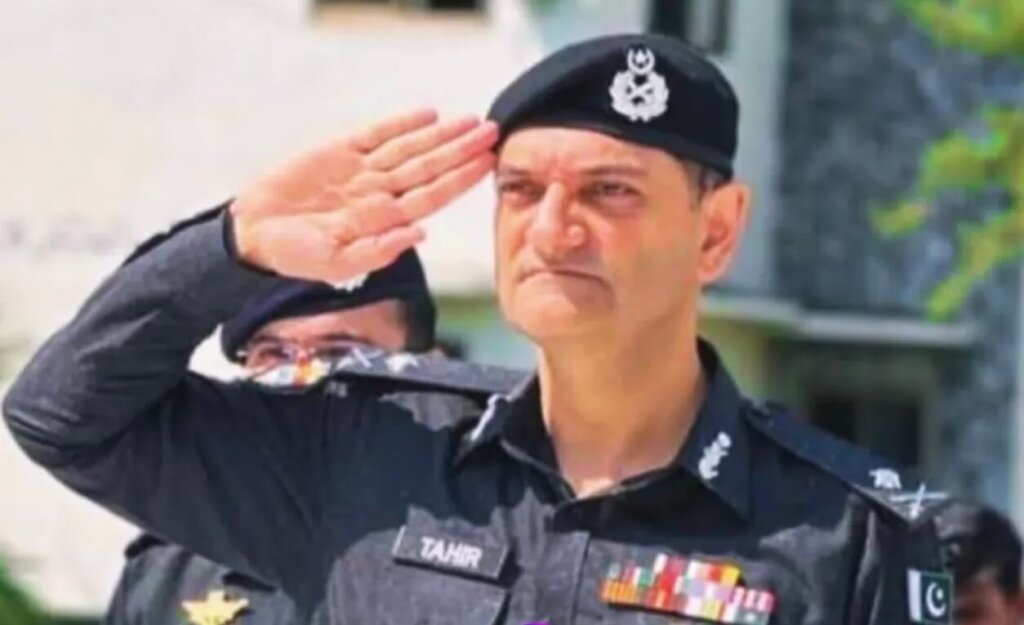
QUETTA: In a sharp indictment of the regional security fallout following the Western withdrawal from Afghanistan, Inspector General of Police (IGP) Balochistan, Muhammad Tahir, has directly linked the surge of high-tech terrorism in the province to the estimated $7 billion worth of modern military equipment left behind by United States forces.
Speaking at a strategic briefing at the Chamber of Commerce and Industry Quetta, the provincial police chief asserted that Pakistan is bearing the direct brunt of this weapon proliferation, which has escalated localized militancy into a complex “hybrid war.”
”The Americans spent decades building a security force in Afghanistan designed to stand for 30 years, yet it crumbled in less than three days,” IGP Tahir stated. “Worse still, the US left behind an arsenal of advanced weaponry valued at $7 billion. We are facing the intense fallout of that hardware on our soil today.”
The police chief explained that law enforcement is no longer battling a conventional, low-tech insurgency. Backed by highly sophisticated gear—including military-grade hardware circulating on the regional black market—militant factions are implementing asymmetric tactics.
A particularly alarming shift in this hybrid warfare strategy, the IGP noted, is the deliberate deployment and weaponization of women by terrorist networks to execute strikes.
To suppress this heavily armed threat, Balochistan Police have rapidly expanded their counter-terrorism operations. IGP Tahir revealed that forces have executed more than 2,000 intelligence-based operations (IBOs) during the current year alone.
While these intense operations successfully neutralized 164 active terrorists, they required a major institutional sacrifice, resulting in the martyrdom of 47 brave police personnel.
Concluding his address to the Balochistan Business Alliance and Action Committee, the IGP noted that while security measures are being tightened at vital trade transits to protect commercial transport, absolute solidarity from civil society and business leaders is critical to defeating this multi-layered threat.