By Saeed Ahmed:
QUETTA: The Government of Balochistan’s Home Department has completed a landmark year of reforms, introducing a series of legislative, institutional, and administrative initiatives aimed at strengthening law and order, modernizing governance, and enhancing the province’s overall security architecture.
Working under the vision of Chief Minister Mir Sarfraz Bugti, the department shifted its focus beyond routine administration to long-term institution building, technological modernization, and criminal justice reforms designed to reinforce the writ of the State across Balochistan.
Modern Legal Reforms
During the past year, the Home Department introduced significant legal reforms, including amendments to the Witness Protection framework, reforms to the Balochistan Forensic Science Agency law, legislation enabling Faceless Courts for high-risk terrorism cases, detention centre regulations, the Safe City Authority framework, the Balochistan Prison and Correctional Service Act 2026, and the Probation and Parole Act.
These measures are intended to establish a modern and efficient criminal justice system capable of addressing emerging security threats while improving transparency and accountability.
Institutions Brought into Operation
The department also focused on translating legislation into practical implementation.
The Centre of Excellence on Countering Violent Extremism was made fully operational to support research, policy formulation, and evidence-based counter-extremism strategies.
Detention centres were activated under the legal framework for the first time, with the Quetta facility already functional and a modern centre under construction in Turbat.
Strengthening Security Institutions
As part of its institutional reforms, the Home Department operationalized the Provincial Intelligence Fusion and Threat Assessment Centre (PIFTAC) to enhance intelligence sharing and inter-agency coordination.
The Balochistan Integrated Security Architecture (BISA) was also established to improve coordination among provincial security institutions.
The Balochistan Charities Registration Authority (BCRA) initiated the province-wide registration and regulation of charities, NGOs, and religious seminaries in accordance with applicable laws.
Several specialized units, including the Red Notice Cell, Anti-Illegal Spectrum Cell, Anti-Subversion Cell, Anti-Extortion Coordination Mechanism, and Human Trafficking Cell, were also established to strengthen intelligence-led policing.
Safe City Project Delivers Results
Technology remained at the centre of the department’s security strategy.
Safe City operations were reorganized under a unified provincial framework with enhanced institutional oversight, advanced surveillance systems, and digital monitoring tools.
Officials said the system has already facilitated the recovery of more than 100 stolen vehicles and assisted in the arrest of numerous suspects. Plans are also underway to expand the Safe City Project to additional cities across Balochistan.
Improved Protection of Public Facilities
For the first time, a comprehensive Security of Vulnerable Establishments programme was implemented throughout the province.
Security audits were conducted at government offices, hospitals, educational institutions, and other sensitive installations, while more than 1,500 locations were equipped with modern CCTV surveillance systems to strengthen public safety.
Counter-Terrorism Capacity Expanded
The Home Department further enhanced its counter-terrorism capabilities by establishing a dedicated drone surveillance unit to support intelligence gathering, anti-terror operations, and anti-narcotics enforcement.
Bomb disposal units were strengthened, while work continued on introducing video-link proceedings and faceless trials for high-risk terrorism cases to ensure the safety of judges, prosecutors, and witnesses.
Illegal Foreigners Repatriation Plan
One of the largest administrative operations undertaken during the year was the implementation of the Illegal Foreigners Repatriation Plan.
In coordination with district administrations, Police, Levies, Special Branch, Frontier Corps, and other agencies, approximately 1.1 million illegal foreign nationals were repatriated from Balochistan in an organized and lawful manner.
Authorities said the initiative improved regulatory oversight, strengthened the rule of law, and eased pressure on public resources.
Historic Anti-Narcotics Operations
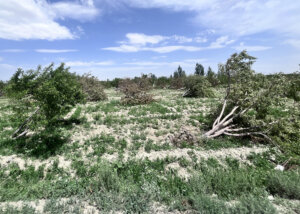
The department also launched one of the province’s largest anti-poppy campaigns.
Using drone technology, field verification, and coordinated enforcement, thousands of acres of illegal poppy cultivation were identified and destroyed.
Parallel operations against illegal tobacco cultivation and trade resulted in record seizures, helping curb tax evasion and dismantle illicit markets.
Administrative Restructuring
Major administrative reforms included the merger of the Levies Force into the Police Department and the integration of Civil Defence into the Special Branch, improving institutional coordination and operational efficiency.
Towards a Safer Balochistan
Officials describe the past year as the beginning of a broader transformation in Balochistan’s security and governance landscape. While acknowledging that significant challenges remain, the Home Department believes the reforms have laid the foundation for stronger institutions, modern policing, improved criminal justice, and sustainable peace.
The transition from legislation to institution building reflects a long-term vision of creating a safer, more stable, and more prosperous Balochistan through effective governance, modern laws, and consistent implementation.