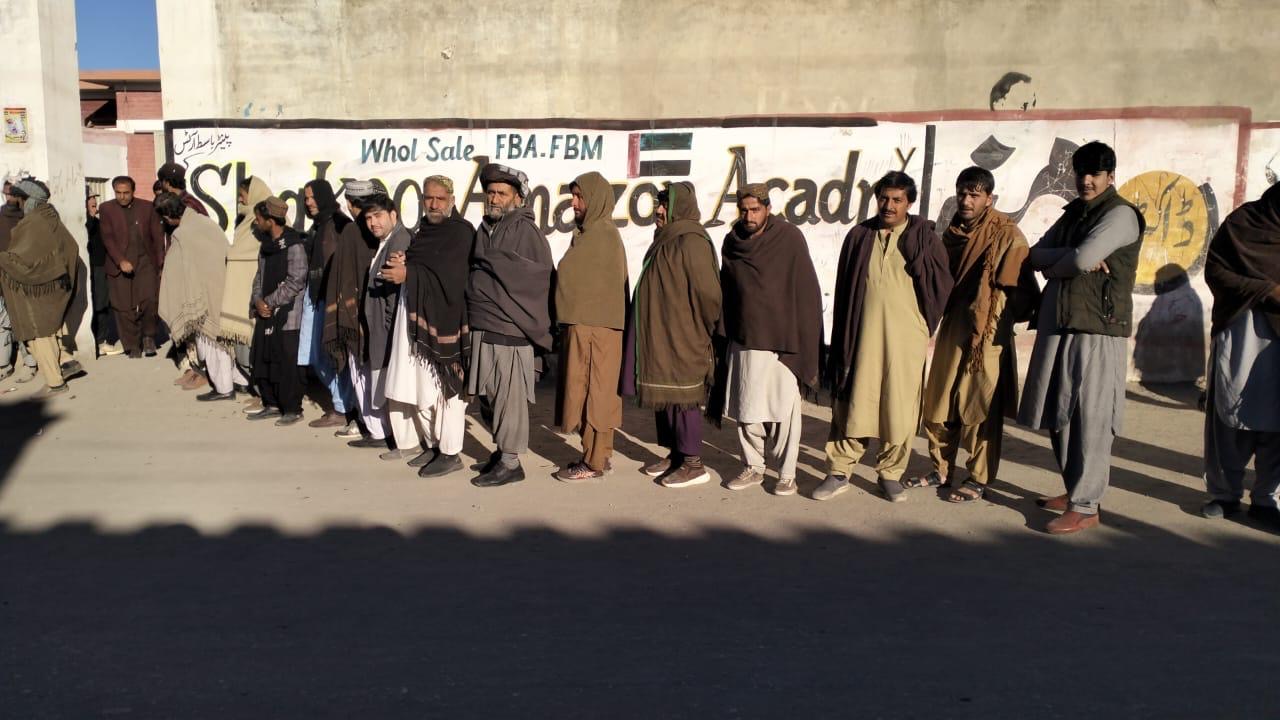
By Zia-ud-din: Every five years, a citizen walks to the polling station, casts his vote, and walks out with a satisfaction of having participated in the democratic process. A month later, the same citizen sees his street filled with a pile of garbage, observes that the road has deteriorated, and discovers that the school is falling apart. He wants to complain but lacks access to his representative. This is the paradox of Pakistan’s democracy: it has transferred power from the center to the provinces but has yet to devolve it effectively to the third tier of government.
Since the creation of Pakistan, democracy reaches the ballot box but never reaches the doorstep of the citizen. In other words, the local government system has not evolved in letter and spirit. Despite insertion of Article 140A, local governments in Pakistan face a deep rooted structural problem: constitutional, political, fiscal, and administrative constraints.
The biggest problem faced by local government systems in Pakistan is constitutional weakness. Although Article 140A stated the formation of local governments, it is six-to-seven-line provision. It leaves detailed institutional design, powers, functions, and fiscal dimensions to provincial legislation .
Apart from the constitutional weaknesses, local government systems are also politically marginalized. They are victims of the centralization of power at the provincial level. Strong political elites view empowered local governments as a threat to their political power. Moreover, the development funds of MPAs and MNAs create a parallel political structure, undermining the effectiveness of local governments. Thus, the local government structure becomes largely ceremonial rather than an independent tier of government.
Local governments remain financially dependent on provincial governments, limiting their ability to function effectively. Under the 7th NFC Award, the provinces’ share of the divisible pool was increased to 57.5 percent. However, the NFC framework does not require the provincial governments to allocate a specific share of these transfer to local governments. According to a World Bank report of 2026, the share of total government spending on local bodies declined from 10 percent in 2005 to less than 5 percent in 2024. As a result, local governments are unable to perform basic services such as water supply, sanitation, solid waste management, primary education, and other basic local needs.
In addition to constitutional, political, and fiscal challenges, the local government system also faces deep administrative constraints that dilute its operational effectiveness. The civil servant continues to perform the tasks of local representatives through their daily administrative functions. As a result, the overlapping roles create confusion over authority. Furthermore, the lack of continuity is also a major impediment that prevents the development of a stable local administrative system. Consequently, it leads to limited administrative autonomy, reducing its efficiency and responsiveness.
India’s experience of local government provides a useful case study for Pakistan. The landmark 73rd and 74th Constitutional Amendments of 1992 established Panchayati Raj institutions and urban local bodies. They list 29 subjects for Panchayats and 18 subjects for municipalities. Furthermore, the amendments ensure regular elections and reserve seats for women and different castes. Both rural and urban local bodies receive financial resources from the state and central governments.
Strengthening the third tier of governance in Pakistan is a prerequisite for both grassroots democracy and effective service delivery. Constitutional protection is the most necessary step in the right direction. The Constitution must clearly detail the structure, tenure, and functions of local governments. Political elites must change their mindset of centralization. Local governments need to derive their powers and functions from the Constitution rather than provincial or federal governments.
Without financial empowerment, local governments cannot ensure effective governance. Therefore, Provincial Finance Commissions must be activated to ensure the transfer of sufficient funds to local governments. Lastly, institutional building and administrative autonomy are necessary steps to ensure effective local administration.
On the whole, democracy is not merely about elections or representation, rather, it is a practice of participation, transparency, inclusivity, and accountability. It can only be achieved when governance is brought closer to the voters. Central and provincial governments cannot provide local services as effectively as local governments can. Local government not only brings about effective governance but also deepens democratic participation. Ultimately, democracy becomes meaningful when it reaches the doorstep of the citizen.
The author holds a BS in Political Science and hails from Zhob, Balochistan. His areas of interest include governance, public administration, democratic institutions and public policy.