Health Desk
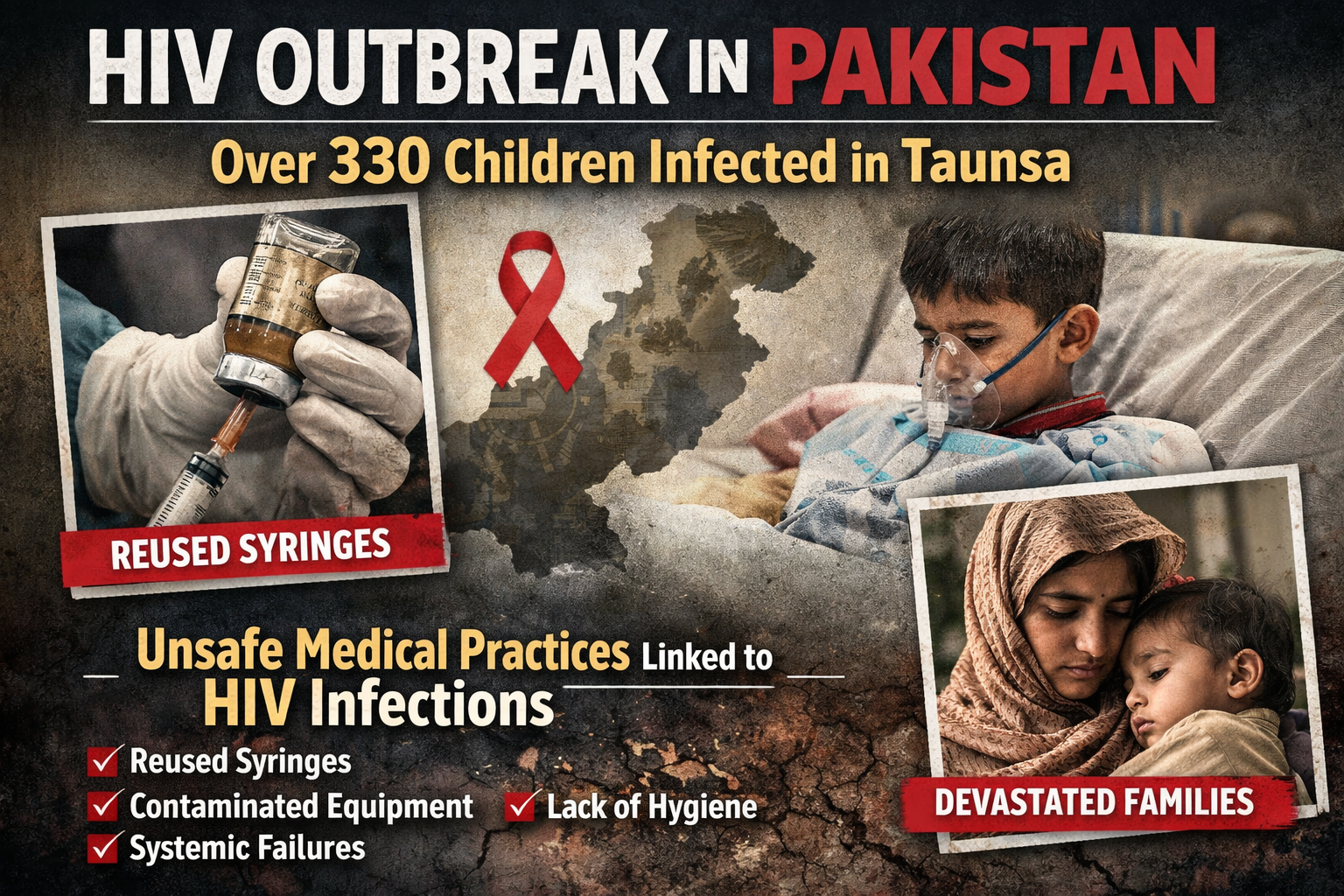
Quetta: In a deeply distressing development from Taunsa, more than 330 children have been diagnosed with HIV over the past year—an outbreak now linked to unsafe medical practices at a public hospital meant to care for them.
An undercover investigation by BBC Eye uncovered what should never happen in any healthcare setting: syringes being reused, medications drawn from shared vials with contaminated equipment, and injections given without even basic protective measures like gloves. These lapses appear to have turned routine medical visits into a source of life-altering infection.
How did this happen?
For many of these children, there was no typical risk factor for HIV. Their parents were not infected. There was no history suggesting exposure through known routes.
What they did have in common was simple—and alarming: they had received injections at the same facility, the THQ Hospital Taunsa.
Medical experts point toward iatrogenic transmission, meaning the infection was passed through healthcare procedures themselves. When syringes or needles are reused—even partially—it can transfer infected blood from one patient directly to another.
More than numbers—real lives affected
Behind the figure “331” are families grappling with shock, grief, and anger. Many parents had taken their children for ordinary treatments—fever, minor illness—never imagining those visits could result in a lifelong condition.
Some children are now seriously ill. Others face the long road of treatment, stigma, and uncertainty that comes with an HIV diagnosis.
A Failure of System not Just Individuals
What makes this harder to accept is that these infections were entirely preventable.
Basic safety measures—using a new syringe for every patient, maintaining sterile technique, proper disposal—are among the most fundamental principles of medicine. Their absence points not just to individual negligence, but to systemic gaps in training, oversight, and accountability.
Even more concerning, reports suggest that similar practices continued despite earlier warnings and interventions.
Why this matters beyond Taunsa
This is not just one hospital’s story. It reflects a broader public health concern: in settings where resources are limited or protocols are poorly enforced, unsafe injections can silently spread infections like HIV and hepatitis.
A call for urgent change
This tragedy has made one thing painfully clear—healthcare must be safe before it can heal.
Preventing such outbreaks requires:
Strict enforcement of infection control standards
Reliable access to single-use or auto-disable syringes
Continuous training and monitoring of healthcare workers
Transparent investigations and real accountability
Most importantly, it requires recognizing that every patient—especially every child—deserves care that does no harm.
This outbreak is not just a medical crisis. It is a reminder of how fragile trust in healthcare can be—and how essential it is to protect it.