By Ayesha Tanveer
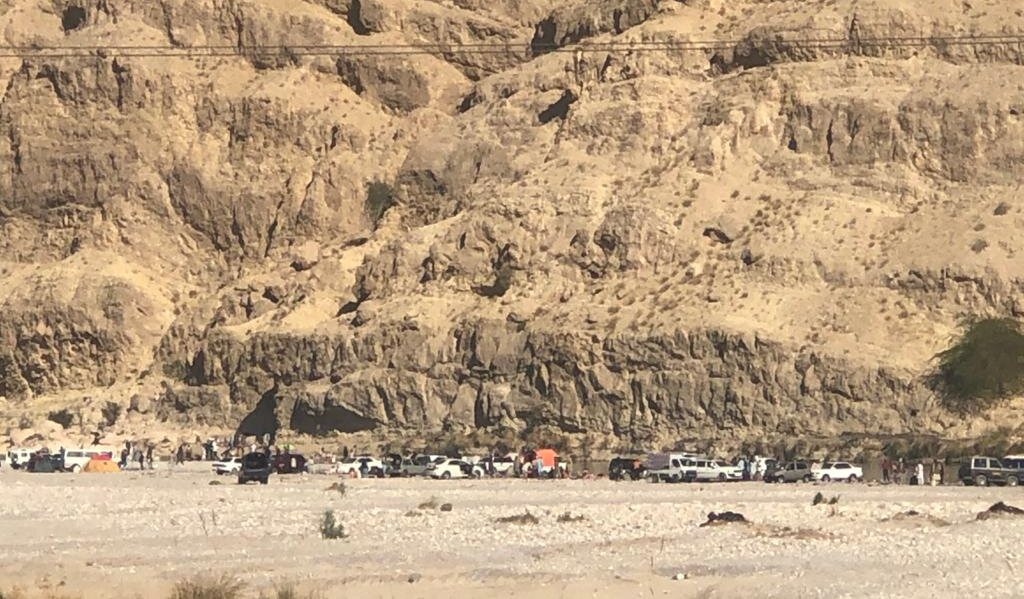
In the valleys of Bolan, the land tells a story that is easy to miss if we only look at the surface. The mountains stand tall, the valleys stretch across the landscape, and farmers continue to work the soil as their families have done for generations. But beneath this familiar picture, something is changing. Little by little, the soil that supports agriculture and rural life is being washed away by sudden floods, carried off by strong winds and weakened by years of pressure on the land.
Soil erosion may not happen overnight, and it rarely makes headlines. Yet for the people who depend on the land, its effects are real. A field that once produced a reasonable harvest may gradually become less productive. A farmer who once relied on rain and traditional methods may find that the same approach no longer works. For communities in Bolan, soil erosion is becoming more than an environmental concern—it is increasingly a threat to agriculture, livelihoods and the future of rural life.
A Fragile Land Under Pressure
Balochistan is Pakistan’s largest province by area, covering nearly 44 percent of the country’s land. Yet only a small portion of this vast region is suitable for cultivation. In places like Bolan, farming has always depended on a delicate relationship between soil, rainfall, water availability and traditional knowledge.
That relationship is now under growing pressure
Bolan lies in an arid to semi-arid region where rainfall is limited and unpredictable. Farmers can experience long dry periods followed by sudden and intense rainfall. Instead of slowly soaking into the ground, heavy rain can rush through valleys and fields, creating flash floods that carry away the most valuable layer of soil.
This is one of the greatest problems with soil erosion: the soil that disappears first is often the soil that agriculture needs the most.
The topsoil contains organic matter and nutrients essential for healthy crops. Once it is washed away, rebuilding it can take years, sometimes decades.
When Rain Becomes a Threat
Rain is essential for life and agriculture, but in Bolan, the way rain arrives can sometimes be as important as how much rain falls.
After months of dryness, the soil may become hard and vulnerable. When intense rainfall suddenly arrives, water can move rapidly across the surface instead of being absorbed into the ground. In the mountainous terrain of Bolan, steep slopes make this runoff even faster.
The result can be devastating. Water cuts through fields, carries soil downhill and deposits sediment in streams and irrigation channels. What begins as erosion on a hillside can eventually contribute to blocked waterways, increased flood risks and damage to agricultural land.
This creates a difficult cycle: dry conditions weaken the land, intense rainfall removes the soil, and the loss of soil makes the land even more vulnerable the next time heavy rain arrives.
Human Activities Are Making the Problem Worse
Nature is not the only factor behind the changing landscape. Human activities have also played an important role.
Vegetation is one of the land’s natural defenses against erosion. Trees, shrubs and grasses help hold soil together through their roots and reduce the speed at which rainwater flows across the ground. When vegetation is removed, the soil is left exposed.
In many areas, trees and shrubs are cut for fuelwood and construction. Over time, the loss of vegetation leaves hillsides and open land more vulnerable to wind and water.
Livestock grazing is another important part of life in Bolan, but too much grazing can place enormous pressure on fragile rangelands. Goats, sheep and cattle depend on these lands for food, while local families depend on livestock for income and survival. The problem arises when grazing becomes excessive and vegetation does not have enough time to recover.
Without sufficient grass and shrub cover, the soil is exposed. Repeated movement of animals can also compact the ground, making it harder for rainwater to enter the soil. More water then flows across the surface, taking soil with it.
Farming Practices and the Loss of Fertility
Farmers in Bolan are working under difficult circumstances. Water is scarce, rainfall is uncertain and access to modern agricultural resources can be limited. Many farming practices have developed out of necessity rather than choice.
However, some traditional and intensive practices can unintentionally contribute to soil degradation. Repeated deep ploughing can disturb soil structure, while limited crop rotation and a lack of organic matter can gradually weaken the soil.
In areas where farmers struggle to find enough fodder for livestock, crop residues may be removed from fields instead of being left to protect the soil. As a result, fields can remain exposed for long periods.
The consequences become visible over time. As fertile topsoil disappears, the soil loses nutrients and organic matter. Crops may grow less vigorously, and harvests may decline.
For a small farmer, this is not simply a number on a production chart. A smaller harvest can mean less food for the family, less income and greater difficulty paying for seeds, fertilizer and other agricultural expenses.
The Hidden Cost of Declining Soil Fertility
Healthy soil does more than provide nutrients to crops. It also acts like a natural reservoir, holding water and making it available to plants during dry periods.
When erosion removes organic matter and damages soil structure, the land becomes less capable of retaining moisture. In a dry region like Bolan, this can be particularly damaging.
Farmers may then turn increasingly to chemical fertilizers to compensate for declining fertility. Fertilizers can help crops in the short term, but they cannot replace the lost structure and organic matter of healthy soil. They can also increase production costs for farmers who are already financially vulnerable.
This can create a difficult cycle:
Soil erosion reduces fertility → crop yields decline → farmers spend more on inputs → production costs increase → household income falls → poverty and economic pressure grow.
Breaking this cycle requires restoring the health of the soil itself rather than relying only on short-term solutions.
The Problem Does Not Stop at the Farm
The effects of erosion do not remain within the boundaries of agricultural fields.
When soil is washed away, it often ends up in rivers, streams and irrigation channels. Over time, this sediment can reduce water storage capacity and interfere with irrigation systems.
Sedimentation can also increase flood risks during heavy rainfall. At the same time, the loss of vegetation can damage natural habitats and reduce biodiversity.
If degradation continues for years without intervention, productive land may gradually become severely degraded and increasingly difficult to cultivate. For Balochistan, where cultivable land is already limited, losing even more agricultural land could have serious consequences.
A Crisis That Affects People, Not Just Soil
Perhaps the most overlooked aspect of soil erosion is its human cost.
For many families in rural Bolan, agriculture and livestock are not simply occupations. They are a way of life. When the land becomes less productive, the effects reach directly into people’s homes.
Lower crop yields can reduce household income and increase food insecurity. Families may become more dependent on outside food supplies or government assistance. As farming becomes less reliable, young people may leave villages and move toward urban areas in search of better opportunities.
Over time, environmental degradation can therefore contribute to social change and migration.
This is why soil erosion should not be treated as an isolated environmental issue. It is connected to poverty, food security, employment, migration and the long-term stability of rural communities.
There Is Still Time to Act
There are practical steps that can make a difference. Farmers can adopt conservation agriculture techniques such as reduced tillage, crop rotation and retaining crop residues. Adding organic matter to the soil can improve its structure and help it retain moisture.
Restoring vegetation is equally important. Planting native trees, shrubs and grasses can help stabilize slopes and protect the land from erosion.
Grazing also needs to be managed carefully. Controlled grazing systems can give damaged rangelands time to recover while still allowing communities to maintain their livestock.
Water management offers another important opportunity. Small check dams, rainwater harvesting systems and improved irrigation methods can slow down runoff, capture water and reduce soil loss. These measures can be particularly valuable in areas where every drop of water matters.
But no solution will work without the involvement of the people who live on the land.
Farmers, livestock owners and local communities must be part of the decision-making process. They understand their environment, its challenges and its changing conditions. Government institutions, agricultural experts and development organizations can support them with technical knowledge, training and resources, but long-term success will depend on local participation.
Conclusion
Soil erosion in Bolan is a quiet crisis, but its consequences are anything but small. Every layer of fertile soil that disappears represents a loss of agricultural potential. Every degraded field puts additional pressure on a farmer. Every damaged hillside increases the vulnerability of communities to floods and land degradation.
The challenge is becoming more urgent as climate change, water scarcity and extreme weather place additional pressure on already fragile landscapes.
Protecting Bolan’s soil therefore means protecting much more than farmland. It means protecting the food security and livelihoods of families who depend on agriculture. It means preserving the natural environment and reducing the risk of future land degradation.
The soil beneath our feet may seem ordinary, but for the people of Bolan, it is the foundation of their lives.
Saving that soil is not just an environmental responsibility. It is an investment in the future of Bolan and the people who call it home.