By Zeeshan Khan
Urdu is more than a language. It is a symbol of Pakistan’s cultural identity, literary heritage and national unity. Yet, in a society where English increasingly dominates education, official affairs and professional life, an important question arises: are we preparing our younger generation for global competition at the cost of their connection with their own national language?
The growing preference for English in Pakistan has created a linguistic divide that extends beyond communication. For many people, English proficiency has become a symbol of social status, educational achievement and professional success. Meanwhile, Urdu, despite its national status, often receives less attention in classrooms, workplaces and government institutions.
This situation demands serious reflection. A nation can embrace modern education and international opportunities without neglecting the language that represents its identity.
Urdu and Pakistan’s National Identity
The progress of a nation depends not only on economic development and scientific advancement but also on its cultural foundations. Language plays a central role in shaping collective identity, preserving traditions and connecting generations.
Urdu has historically served as a common medium of communication among diverse communities in Pakistan. Its literature, poetry, journalism and intellectual traditions have contributed significantly to the country’s cultural landscape.
However, the position of Urdu in practical affairs does not always reflect its constitutional status. Article 251 of the Constitution of Pakistan declares Urdu the national language and provides for arrangements for its use for official purposes. Nevertheless, English continues to dominate many administrative, educational and professional settings.
This gap between constitutional recognition and everyday practice raises an important question: why has Urdu struggled to secure a stronger position in the institutions of its own country?
The answer involves historical practices, educational policies, administrative traditions and the widespread perception that English offers better opportunities for social mobility.
English: A Gateway to Opportunity or a Barrier to Equality?
There is no denying the importance of English in the modern world. It facilitates access to international research, scientific literature, technological developments and global employment opportunities. Pakistani students need English-language skills to compete effectively in many academic and professional fields.
The problem begins when English proficiency becomes a substitute for measuring knowledge, intelligence and competence.
In Pakistan, students who speak English fluently may receive greater social recognition, while those who communicate primarily in Urdu or regional languages can face unfair judgments about their educational abilities. This perception can disadvantage talented students who lack access to expensive English-medium schools or additional language-learning resources.
Consequently, language can become a marker of privilege rather than simply a tool for communication.
A student’s ability to understand science, solve mathematical problems, analyse social issues or demonstrate professional competence should not be judged solely by fluency in English. Educational institutions must recognise the difference between subject knowledge and language proficiency.
Pakistan needs an education system in which English opens doors to international opportunities without becoming a barrier that excludes capable students from disadvantaged backgrounds.
The Growing Distance Between Young People and Urdu
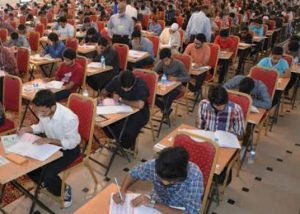
One of the major concerns is the declining engagement of some younger people with Urdu reading, writing and literature. In certain educational environments, students may become comfortable communicating in English while struggling to express complex ideas in Urdu.
This does not mean that the younger generation is responsible for the problem. Their linguistic habits are shaped by the education system, family environments, digital platforms and social expectations.
When schools give greater prestige to English, parents naturally encourage their children to master it. When employers prioritise English communication, students respond accordingly. When academic resources and professional opportunities are concentrated in English, the preference becomes even stronger.
The result is a cycle in which Urdu is treated as less useful despite its importance in public communication and cultural life.
The solution is not to discourage English-speaking students or restrict their educational choices. Instead, schools and families should create opportunities for young people to read Urdu books, explore literary traditions, write creatively and use the language confidently in academic and professional discussions.
Urdu must become a language of knowledge, innovation and contemporary expression—not merely a subject students study to pass an examination.
Urdu Education Deserves Serious Attention
Language education should develop practical skills rather than focus exclusively on memorisation. Students need opportunities to improve their reading comprehension, vocabulary, writing, critical thinking and ability to communicate ideas clearly.
The same principle applies to Urdu and English.
Educational institutions should invest in modern Urdu textbooks, high-quality digital learning materials, literary activities and translation projects. Scientific and academic concepts should also be made accessible through reliable Urdu resources, helping students understand complex subjects while strengthening their command of the language.
At the same time, English should remain an essential component of education. Students need both languages to participate effectively in national life and the international academic community.
A balanced approach would enable young people to understand global developments in English while communicating their ideas, experiences and knowledge confidently in Urdu.
Urdu in Government and Public Institutions
The use of Urdu in official affairs is another important dimension of the debate. Article 251 of Pakistan’s Constitution provides the constitutional basis for promoting Urdu as the national language and arranging its use for official purposes.
However, translating this principle into effective administrative practice requires planning, institutional commitment and consistent implementation.
Government departments could expand access to Urdu-language forms, public information, educational materials and citizen services. Legal and administrative documents should be made understandable to ordinary citizens, with accurate translations and appropriate safeguards where authoritative legal texts are required.
Such measures would improve accessibility and help citizens engage more effectively with public institutions.
Promoting Urdu in official affairs should not mean abandoning English where it is practically necessary. Rather, it should ensure that citizens are not disadvantaged simply because they cannot understand complex English-language documents or administrative procedures. A national language gains strength when people can use it meaningfully in everyday life.
Literature, Writers and the Responsibility of Society
Writers, poets, journalists, teachers and intellectuals have an important role in keeping Urdu relevant to contemporary society. Literature preserves collective memory, challenges established ideas and provides a space for discussing social and political realities.
International literary gatherings and conferences have historically offered opportunities for scholars and writers to examine the challenges facing Urdu, including the influence of other languages and the changing relationship between literature and society.
A conference organised under the auspices of Daily Express, titled “The Pressing Problems of Urdu and the New Generation,” brought together writers, scholars and poets to discuss these concerns. Its programme included sessions on the influence of other languages on Urdu, the turmoil of Pakistani society and the role of writers, as well as the position of Urdu in India.
The event also featured a Mushaira involving prominent literary figures from Pakistan and abroad.
Such gatherings demonstrate the importance of sustained intellectual discussion about Urdu’s future. However, conferences alone cannot secure the language’s long-term vitality. Their ideas must translate into educational reforms, stronger publishing initiatives, accessible literary resources and greater public engagement.
Writers must also respond to the interests of younger readers by exploring contemporary themes, experimenting with new forms and making Urdu literature accessible through digital platforms.
Technology Can Give Urdu a New Future
The digital age presents both challenges and opportunities for Urdu. Although English dominates many areas of online education and technology, digital platforms can help Urdu reach new audiences.
Educational websites, e-books, podcasts, video lectures, online dictionaries and Urdu-language scientific content can make learning more accessible. Social media can also encourage young writers to publish poetry, essays, stories and commentary in Urdu.
Artificial intelligence and language technologies offer further possibilities, including improved translation, speech recognition, digital archiving and the development of educational tools. These opportunities require investment in high-quality Urdu data, reliable linguistic resources and responsible technological development.
If Urdu is to remain relevant, it must be able to communicate the ideas of the modern world. Its future depends not only on preserving classical literature but also on producing contemporary knowledge in the language.
The Way Forward: Balance Rather Than Opposition
Pakistan does not need to choose between Urdu and English. The real challenge is to establish a balanced linguistic policy that recognises the practical value of English while protecting Urdu’s cultural and national significance.
The government should strengthen the implementation of constitutional provisions concerning Urdu. Educational institutions should improve language teaching, publishers should invest in quality content, and families should encourage reading in both languages.
Universities can contribute by supporting research, translation and the publication of accessible academic material in Urdu. Employers, meanwhile, should assess candidates primarily on relevant knowledge, skills and competence rather than treating English fluency as a universal measure of ability.
Young people also have a role to play. Reading Urdu literature, writing in the language and engaging with its cultural heritage can help preserve an important part of Pakistan’s identity.
Learning English is not a betrayal of one’s mother tongue or national language. Similarly, speaking Urdu should never be considered a sign of limited knowledge or ambition.
The objective should be multilingual competence, educational equality and cultural confidence.
Conclusion
The future of Urdu depends on the choices Pakistan makes today. A national language cannot flourish through constitutional recognition alone; it requires consistent use, meaningful investment and public confidence.
English will continue to play an important role in education, science, technology and international communication. Urdu, meanwhile, deserves a stronger place in education, public administration, literature and digital knowledge.
The younger generation should be equipped to compete with the world without being disconnected from its cultural roots. Pakistan’s progress will be stronger when students can access international knowledge, express complex ideas in their national language and respect the linguistic diversity of their society.
The real goal is not to replace English with Urdu, but to ensure that learning English never requires forgetting Urdu.