Syed Ali Shah:
Islamabad: United States Vice President JD Vance arrived in Pakistan on Saturday to lead critical negotiations with Iranian officials, marking the first direct high‑level contact between Washington and Tehran since 1979.
The talks are taking place during a two‑week pause in the US‑Israeli war against Iran, which began on February 28 and quickly spread across the Middle East, disrupting global markets. Pakistan brokered a temporary ceasefire on April 8, creating space for dialogue.
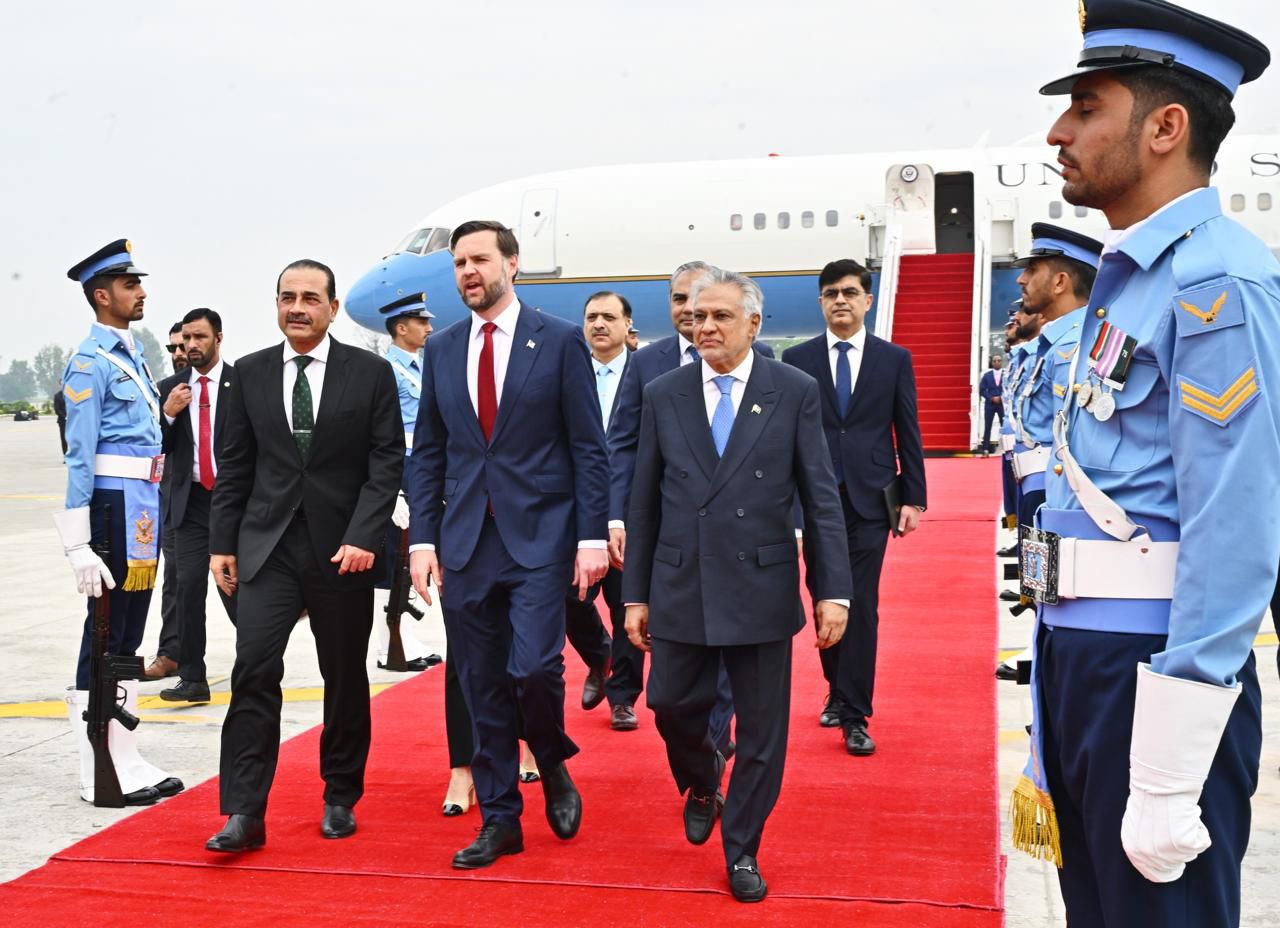
Vance was welcomed at Nur Khan Air Base by Deputy Prime Minister and Foreign Minister Ishaq Dar, Chief of Defence Forces and Army Chief Field Marshal Asim Munir, and Interior Minister Mohsin Naqvi. The Foreign Office confirmed the arrival and highlighted Pakistan’s role in facilitating peace efforts, stressing its commitment to lasting regional stability.
The Iranian delegation, led by Parliament Speaker Mohammad Bagher Ghalibaf and Foreign Minister Abbas Araghchi, reached Islamabad earlier the same day after securing assurances that Israeli strikes in Lebanon would halt. Tehran had made its participation conditional on a ceasefire in Lebanon and the release of frozen Iranian assets abroad, estimated at seven billion dollars.
Iranian negotiators also include Supreme National Defence Council Secretary Ali Akbar Ahmadian and Central Bank Governor Abdolnaser Hemmati. On the US side, Vance is joined by senior officials from the National Security Council, State Department, and Department of Defence, along with Middle East envoy Steve Witkoff and Jared Kushner.
The discussions nearly collapsed on Friday when Ghalibaf insisted that Tehran’s participation depended on two key conditions: a halt to Israeli strikes in Lebanon and the unfreezing of Iranian assets. Iranian officials later confirmed that the pause in attacks around Beirut and Dahieh was secured as a red line for negotiations.
The Islamabad talks are being described as decisive, with both sides under pressure to determine whether the temporary truce can evolve into a broader framework for de‑escalation. Pakistan’s leadership has emphasized its commitment to ensuring constructive engagement, while regional observers note that the outcome could reshape the trajectory of conflict across the Middle East.