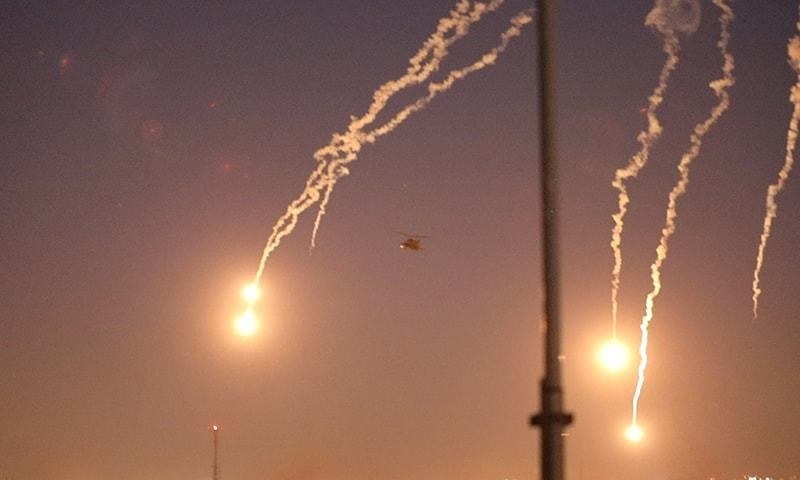
By Our Correspondent: Fresh US-Iran missile exchanges intensified tensions across the Gulf on Sunday, triggering heightened security alerts in several regional countries and renewing fears over the security of the Strait of Hormuz, one of the world’s most critical energy corridors.
The latest round of missile and drone attacks prompted security responses in Qatar, the United Arab Emirates (UAE), Bahrain, Jordan, and Oman, highlighting the growing regional impact of the conflict. Authorities in several Gulf states reported air defense activity or security-related incidents following the exchange.
The escalation has also placed renewed pressure on diplomatic efforts aimed at reducing hostilities. A temporary understanding reached last month to improve maritime security and facilitate further negotiations now faces uncertainty as military operations continue.
Strait of Hormuz at the Center of the Crisis
The Strait of Hormuz, through which nearly 20 percent of global oil and liquefied natural gas shipments pass, remains at the center of the dispute.
Iranian authorities announced restrictions on vessel movements through the strategic waterway, citing security concerns. Meanwhile, U.S. military officials said international shipping lanes remain operational and that efforts to ensure freedom of navigation are continuing despite the heightened threat environment.
The differing positions have added to uncertainty for commercial shipping and global energy markets, with analysts warning that prolonged instability could disrupt oil supplies and increase market volatility.
Gulf Nations Increase Security Measures
Regional governments responded by strengthening security precautions.
Qatar reported that debris from intercepted projectiles injured three people, including a child. The UAE and Bahrain confirmed that their defense systems responded to aerial threats, while Jordan and Oman also reported security incidents linked to missiles or drones.
Omani authorities said rescue teams assisted crew members after a commercial vessel was attacked near its coastline. India also confirmed that one of its nationals remains missing following the maritime incident.
Diplomatic Efforts Continue Despite Escalation
Despite the growing military confrontation, diplomatic engagement has not completely stalled.
Iranian Foreign Minister Abbas Araqchi held talks with Omani Foreign Minister Badr Albusaidi on regional security and maritime developments, while additional consultations involving regional partners are expected.
Araqchi also held a telephone conversation with Pakistan’s Deputy Prime Minister and Foreign Minister Ishaq Dar to discuss the evolving regional situation.
The latest military exchanges underscore the fragile security environment in the Gulf, where continued hostilities could affect regional stability, international trade, and global energy supplies while diplomatic efforts to reduce tensions remain ongoing.