Khudai Noor Nasar
Islamabad — Federal Minister for Planning, Development and Special Initiatives, Ahsan Iqbal, has called for urgent and practical steps to strengthen climate resilience in Balochistan, warning that climate change is no longer a distant threat but a daily reality for Pakistan.
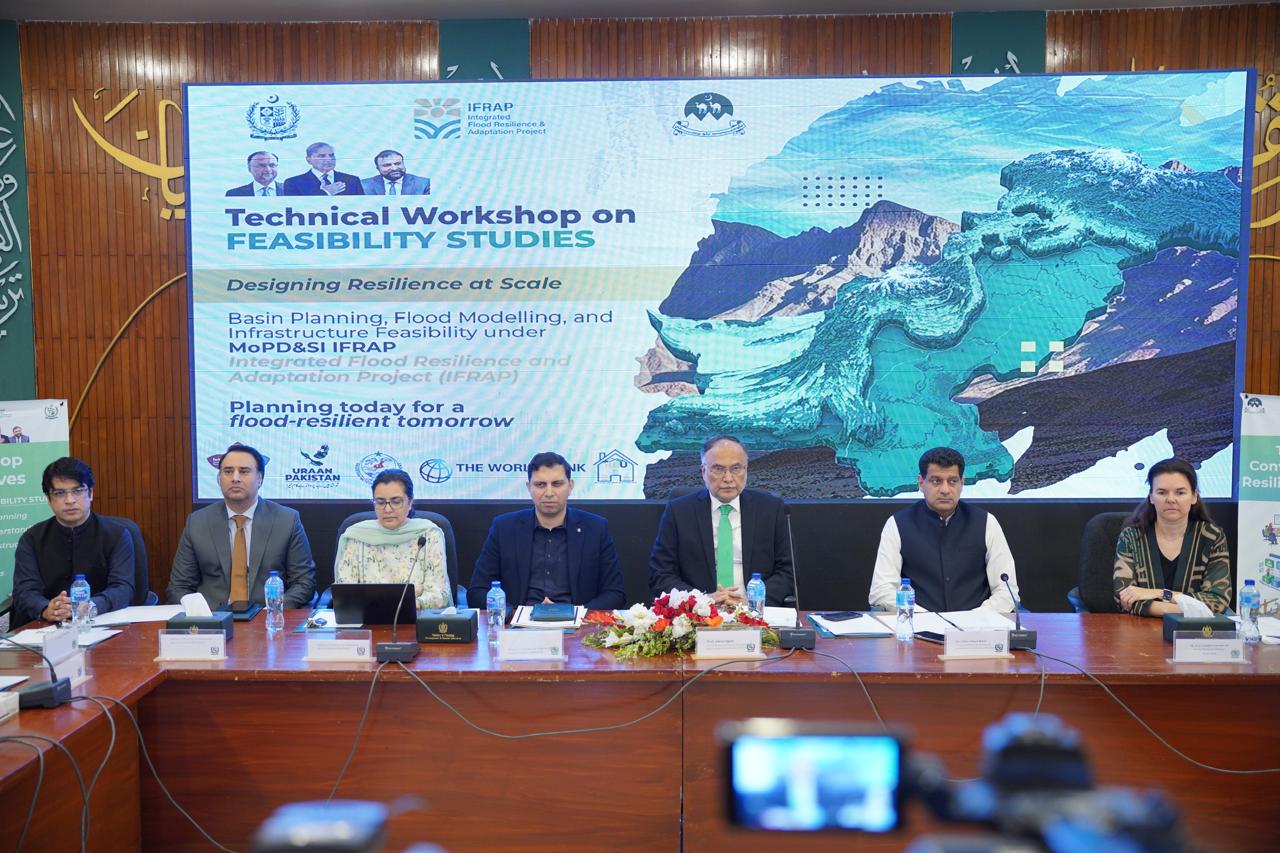
Speaking at the IFRAP Technical Workshop on resilience, basin planning, and flood modeling, he told participants that the country must move beyond reacting to disasters and start preparing for them. Referring to the devastating 2022 Pakistan floods, he noted that regions like Sindh and Balochistan suffered the most, further widening existing inequalities.
The minister explained that the federal government secured a $400 million support package from the World Bank to launch the IFRAP initiative. The program is designed to rebuild damaged infrastructure, restore livelihoods, and, importantly, help communities better withstand future climate shocks.
He also raised serious concerns about Pakistan’s growing water crisis, pointing out that the country is among the most water-stressed in the world. With reservoir capacity shrinking due to silting and no major new dams built in decades, Pakistan currently stores only about 30 days’ worth of water—far below the global standard. He stressed that better water storage systems are critical, especially since most rainfall comes during the monsoon season.
Throughout his address, Ahsan Iqbal emphasized the importance of smarter planning. He highlighted how tools like flood modeling and basin-level planning can help policymakers make informed, science-based decisions rather than relying on outdated approaches.
He also spoke about reforms in development planning, noting a shift toward outcome-based systems. According to him, success should not be measured by how much money is spent, but by the real impact projects have on people’s lives.
Focusing on Balochistan, the minister reaffirmed the government’s commitment to the province, mentioning a development allocation exceeding Rs. 200 billion. However, he warned of a worsening groundwater crisis in Quetta, where water levels are dropping rapidly each year, and called for immediate action to manage water resources more sustainably.
He further highlighted the creation of a National Water Security Task Force, stressing that coordination between federal and provincial governments, along with international partners, will be key to tackling climate challenges effectively.
Wrapping up his speech, Ahsan Iqbal encouraged participants to turn ideas into practical solutions. He expressed hope that with the right investments in water storage, scientific planning, and resilient infrastructure, Pakistan can turn future climate risks into opportunities for long-term sustainability and growth.